Manufacturer: Rockwell Automation
Brand: Alan Bradley
Part number/Catalog number: 1756-L72K
Series: ControlLogix
Module type: processor component
Input/output memory: 0.98 megabytes
User memory: 4 MB
Max input/output: 128,000
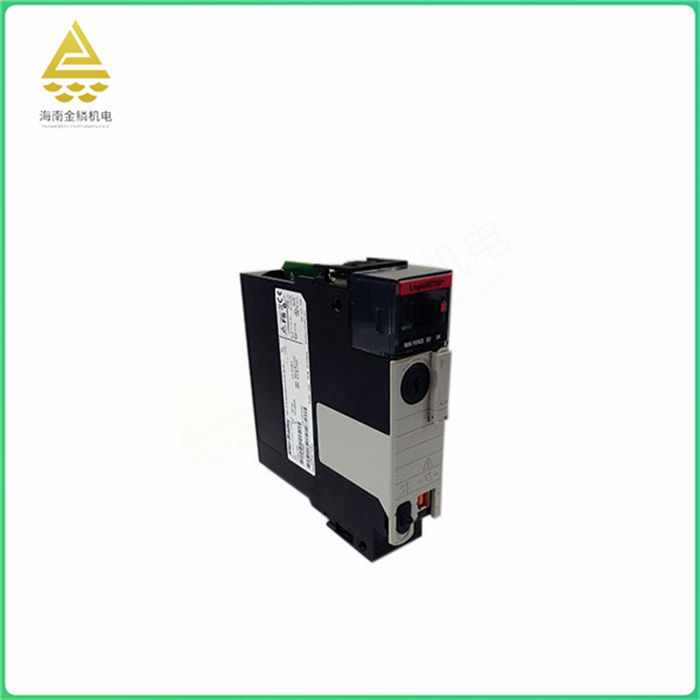
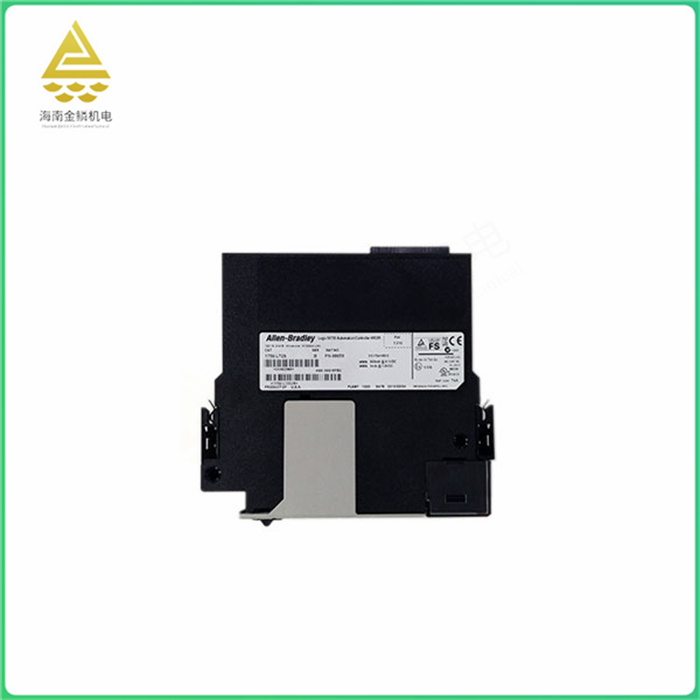
A Programmable Automation Controller (PAC) is an electronic system that operates numerically and is designed for use in industrial environments. It combines the reliability and ease of use of PLC with the powerful computing power and communication processing power of industrial computers. The PAC uses programmable memory to store instructions for performing operations such as logical operations, sequence control, timing, calculation and arithmetic operations, and to control various types of machinery or production processes through digital and analog inputs and outputs.
Key features of PAC include:
Strong anti-interference ability, high reliability.
The program is simple and easy to learn, and the design and debugging period of the system is short.
Simple installation and easy maintenance.
Modular structure, small size, light weight.
Rich I/O interface modules with strong expansion capability.
PAC has a wide range of applications, including sequence control, counting and timing control, position control, analog control, data processing, and communication networking.
Other key features of Programmable automation controllers (PACS) include:
Real-time: PAC has an efficient processor and real-time operating system that can quickly respond to and process input signals, ensuring the accuracy of real-time control and monitoring.
Integration: PAC can integrate a variety of different sensors, actuators and devices to achieve unified control and monitoring.
Man-machine interface: The PAC can be equipped with a touch screen, text display or graphical interface for easy operation and maintenance.
Safety: PAC has complete safety features, such as failsafe, safe stop and fault diagnosis, etc., to ensure the safety of equipment and personnel.
Energy saving: PAC can achieve efficient use and conservation of energy by optimizing control algorithms and energy management.
Maintainability: PAC has self-diagnosis function and fault recording function, which is convenient for users to troubleshoot and maintain.
Remote monitoring: PAC can be remotely monitored and controlled via the Internet or mobile devices to improve production efficiency and equipment utilization.
Adapt to a variety of industries: PAC can be applied to a variety of industries, such as power, petroleum, chemical, steel, paper, etc., to achieve different types of control tasks.
Customizability: PAC can be customized and controlled according to the needs of users to meet specific production requirements and process flow.
These characteristics make PAC has a wide range of applications in the field of industrial automation, can replace the traditional PLC and DCS system, to achieve more efficient, reliable and flexible control and monitoring.


