Manufacturer: Rockwell Automation
Brand: Alan Bradley
Part number/Catalog number: 2711-K6C15
Production line: Panelview 600
Display size: 5 inches
Display color: Color
Input type: keypad
Communication: ControlNet and RS-232 printers
Input power: 85-264 volts AC
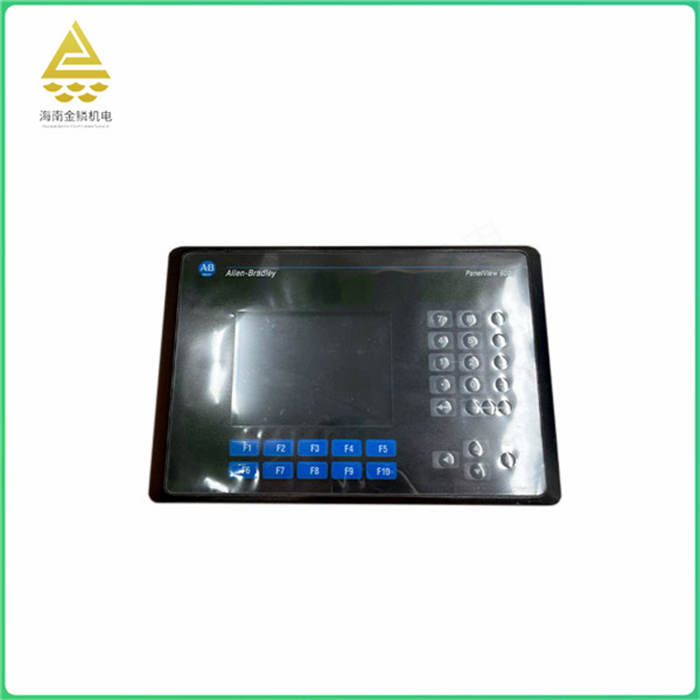
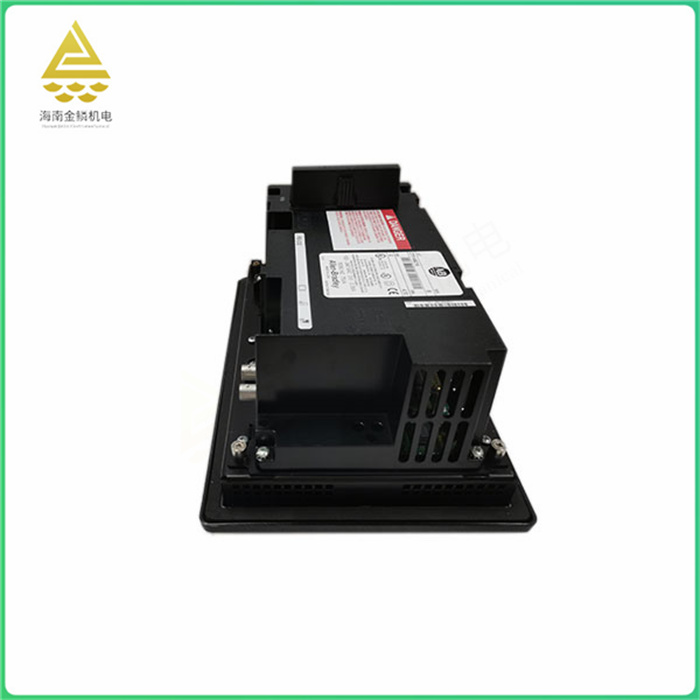
An operator terminal is a human-machine interface device for industrial automation control systems that allows the operator to monitor and control the entire system by inputting instructions and data. Operator terminals are often used with PLCS (Programmable logic controllers) or other industrial automation equipment for more efficient and accurate production process control.
Operator terminals typically have the following functions:
Display: The operator terminal can display various information of the system, such as input, output, alarm, etc., as well as various graphics and images.
Input: The operator terminal allows the operator to enter commands and data through a keyboard, mouse, or other input device, such as setting parameters, modifying programs, etc.
Control: The operator terminal can communicate with the PLC or other industrial automation equipment to achieve the control of the entire system, such as start, stop, emergency stop, etc.
Monitoring: The operator terminal can monitor the status and operation of the system in real time, such as equipment running status, production process, etc.
Alarm: The operator terminal can display and record the alarm information of the system, such as fault, abnormal, etc., and can prompt the operator by sound or light.
Storage: The operator terminal can store the historical data and running records of the system, which is convenient for the operator to query and analyze.
In short, the operator terminal is an indispensable part of the industrial automation control system, which helps the operator to better monitor and control the entire system, improve production efficiency and product quality.
As a man-machine interface device in industrial automation control system, operator terminal has the following characteristics:
Diversity: Operator terminals come in a wide variety of models and specifications to meet the needs of different industrial automation applications.
Reliability: The operator terminal has high reliability and stability to ensure normal operation in harsh environments.
Ease of use: Operator terminals usually have a simple to use interface, and operators can quickly learn how to use them.
Scalability: The operator terminal can expand various functional modules to meet the needs of different users.
Economy: The price of the operator terminal is relatively low, which can reduce the cost of industrial automation control systems.
Safety: Operator terminals are typically explosion-proof, water-proof, dust-proof and can be used safely in hazardous areas and other harsh environments.
Real-time: The operator terminal can display and monitor the operating status and data of the system in real time to ensure that the operator can grasp the dynamics of the system in time.
In short, the operator terminal is an important part of the industrial automation control system, it has the characteristics of diversity, reliability, ease of use, scalability, economy, security and real-time, to meet the needs of different users, improve production efficiency and product quality.


