Brand: bently
Order number: 3500/20-01-01-00
Accuracy: 0.01
Temperature range: 0° to 220°
Power Supply. 230VAC
Explosion-proof class: CT4
Origin: USA
Available: nationwide
Alarm mode: relay
Installation mode: card type
Weight: 1500g
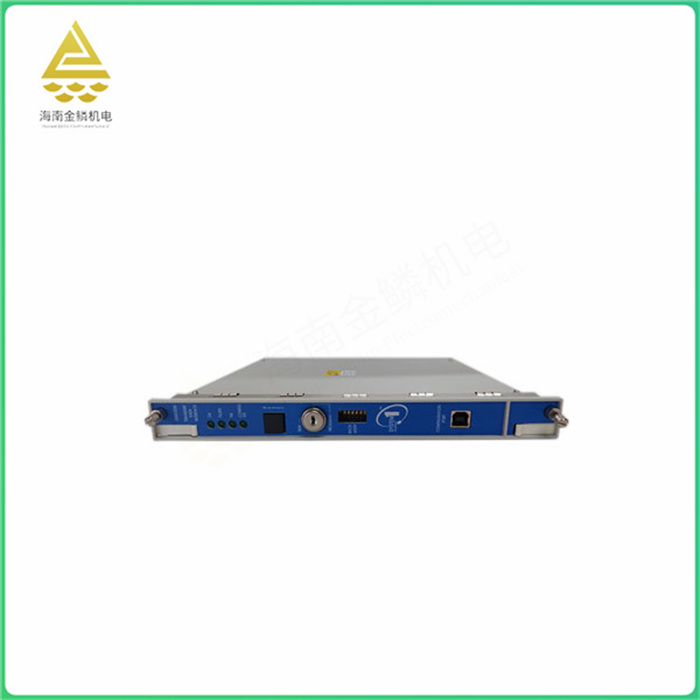
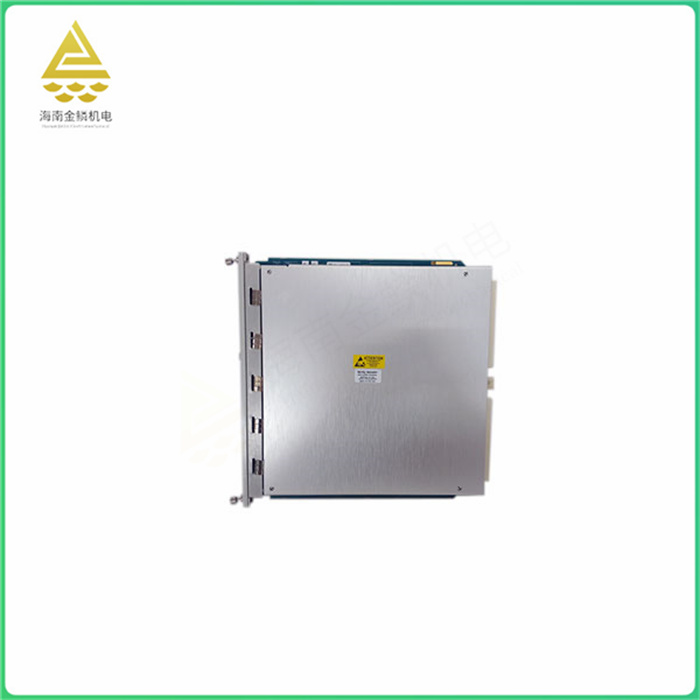
Model: 3500/22-01-01-00
3500 TDI(Transient Data Interface) is the interface between 3500 monitoring systems and GE's system 1* machine management software. The TDI combines the data collection capabilities of 3500/20 rack interface modules (IM)
Force communication processors such as TDXnet. The TDI and M Series - start by running monitors (3500/40m, 3500/42m, etc.) in the RIM slot of the 3500 rack to continuously acquire steady-state and transient waveform data, and
This data is passed to the host software over the Ethernet link (see the Compatibility section at the end of this document.) Static data capture is standard in TDI, but using an optional channel to enable the disk will
Allows TDI to capture dynamic or transient data. Compared to previous communications, TDI has improved on several aspects and integrated communication processor capabilities into 3,500 units.
The standard transient data interface module is a kind of module used for fast data transmission and processing, which has the characteristics of high speed, high precision and high reliability. Such modules are commonly used for data acquisition, processing and control in industrial automation control systems, as well as other application scenarios that require fast data processing.
Standard transient data interface modules usually use high-performance processors and chipsets to achieve efficient data transmission and processing functions. It can receive data from various sensors and actuators, and carry out real-time processing and control, transmitting the processing results to the control system or other devices.
The standard transient data interface module also has high reliability and stability, and can operate stably under harsh environmental conditions. It usually uses a well-sealed housing to prevent moisture and dust from entering the interior of the module, while also preventing the influence of external vibration on its stability.
In short, the standard transient data interface module is a powerful, high-speed, high-precision, high-reliability data processing and transmission module, which can be customized according to different needs to meet a variety of different application scenarios.
The standard transient data interface module is a kind of module used for fast data transmission and processing, which has the characteristics of high speed, high precision and high reliability. Such modules are commonly used for data acquisition, processing and control in industrial automation control systems, as well as other application scenarios that require fast data processing.
Standard transient data interface modules usually use high-performance processors and chipsets to achieve efficient data transmission and processing functions. It can receive data from various sensors and actuators, and carry out real-time processing and control, transmitting the processing results to the control system or other devices. The data transmission speed of this module is very fast, which can meet the requirements of real-time.
The standard transient data interface module also has high reliability and stability, and can operate stably under harsh environmental conditions. It usually uses a well-sealed housing to prevent moisture and dust from entering the interior of the module, while also preventing the influence of external vibration on its stability. The circuit design of this module is also very reliable, which can ensure the stability and accuracy of the data.
Standard transient data interface modules usually have a variety of interface forms, such as RS-485, RS-232, etc., to adapt to different sensor and actuator connection modes. At the same time, it also has dustproof, waterproof, shock-proof and other protective functions, and can work stably in harsh industrial environments.
When selecting the standard transient data interface module, it is necessary to consider the interface form, input type, signal conversion speed, accuracy, reliability and other factors, as well as adapt to different industrial environments and control needs. At the same time, it is also necessary to pay attention to the precautions for installing and using standard transient data interface modules, such as correctly connecting power and signal cables, avoiding excessive vibration and shock.
In short, the standard transient data interface module is a powerful, high-speed, high-precision, high-reliability data processing and transmission module, which can be customized according to different needs to meet a variety of different application scenarios.


