Part number: 3500/42M.
Manufacturer: Bentley, Nevada
Country of Production: United States (USA)
Product Type: Preprocessor seismic monitor
Series: Bentley Nevada 3500
3500/42M Proximitor Seismic Monitor component developed by Bently Nevada. It is a four-channel monitor with proximity and seismic sensor inputs. It compares the tuned signal with a user-programmable alarm and adjusts the signal to produce vibration and position readings. The 3500 rack configuration software can be used to program each channel to monitor and report radial vibration, thrust position, REBAM, acceleration, expansion differential, eccentricity, speed, and other parameters.
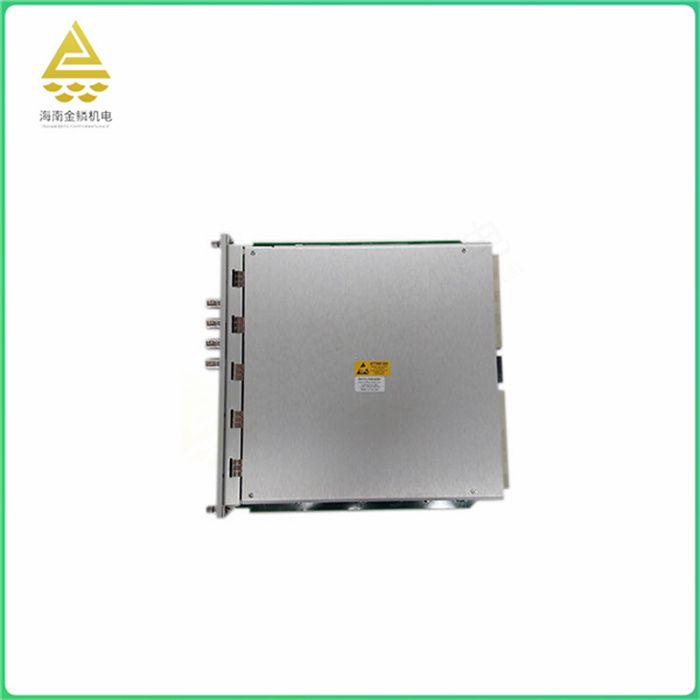
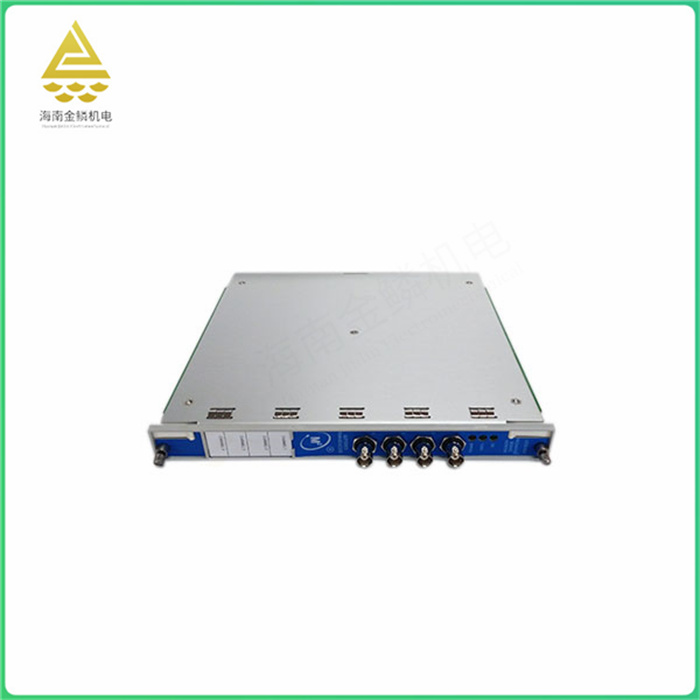
3500/42M features
● Monitoring channels are set in pairs and can perform up to two specified functions simultaneously. For example, channels 1 and 2 can perform one function, while channels 3 and 4 perform another - one or the same function.
Proximitor Seismic Monitor protects machinery by comparing monitoring parameters with selected alarm setting points in real time and triggering alarms. It informs operations and maintenance personnel of information about critical machine information.
According to the arrangement, each channel usually adjusts its input signal to produce a -group static value. You can create an alert setting point for any current static value, and you can set a danger setting point for any two of them.
Use rack configuration software to set an alarm level for any value measured by the monitor and a danger setting point for any two values measured by the monitor. For each measurement, the alarm can be set to 0 to 100% of the full scale. When the full scale range exceeds the range of the sensor, the set point is limited by the range of the sensor.
A precursor seismic monitor is a device used for seismic monitoring that receives signals from seismic inputs through a precursor and passes them to a seismic monitor for recording and analysis. This kind of equipment is usually used in earthquake early warning, seismic exploration, seismic research and other fields.
The main functions of the precursor seismic monitor include:
Receiving seismic input signals: The seismic monitor receives signals from seismic input through the precursor, including seismic waves and tremor signals.
Signal amplification and filtering: The pre-sensor seismic monitor amplifies and filters the received signal to enhance the quality and clarity of the signal.
Data recording and analysis: The preprocessor seismic monitor records the processed signal and analyzes it. This can help researchers understand the nature of earthquakes, the source mechanism, the location of the epicenter and other information.
Real-time monitoring and early warning: The pre-sensor seismic monitor can issue timely earthquake early warning through real-time monitoring and analysis. This can help people take protective measures in advance and reduce the damage caused by earthquakes.
Data transmission and sharing: The pre-sensor seismic monitor can transmit recorded data to other devices or data centers for sharing and analysis. This helps to improve the efficiency and accuracy of seismic research.
In short, presensor seismic monitor is an important seismic monitoring equipment, which can realize the functions of receiving, processing, recording, analyzing and sharing seismic input signals, and provide important technical support for earthquake early warning, seismic exploration, seismic research and other fields.


