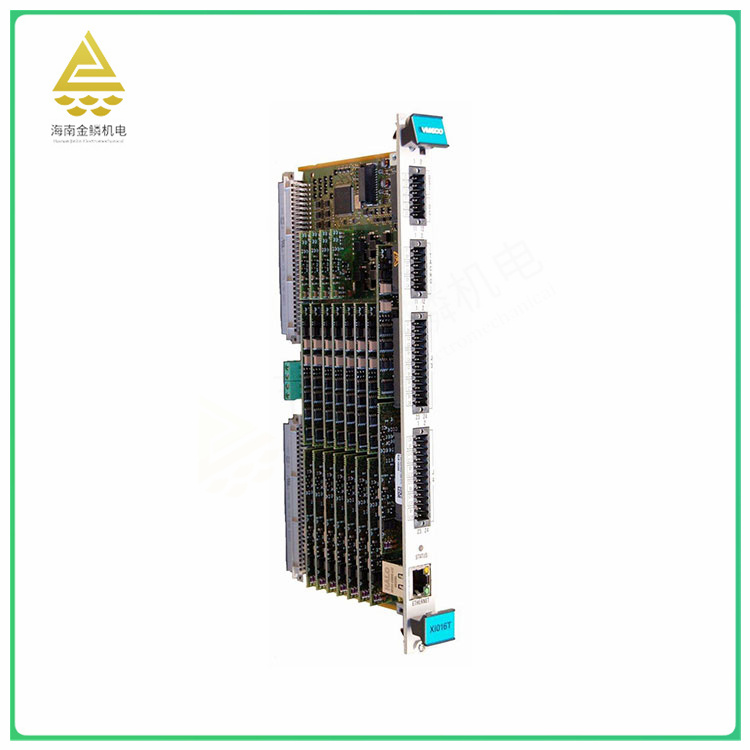
620-002-000-113 620-003-111-112 VM600 XI016T Module VM600 CMC1 6 Technical Specifications ●16 dynamic channels and 4 speed channels ● Up to 20 processing outputs per dynamic channel and per dual channel (12 per xmc 16) Capture data simultaneously on all channels using asynchronous (fixed frequency) or synchronous (sequential tracking) sampling
Advantages:
Integrated functionality: This combination combines vibration monitoring and control capabilities to provide users with a comprehensive solution. The VM600 is responsible for real-time monitoring and analysis of mechanical vibration, while the XIO16T can perform corresponding control operations based on the monitoring results, such as alarm, shutdown or parameter adjustment.
High reliability: Both the VM600 and XIO16T are industrial environment proven modules with high reliability and stability. This enables the entire system to operate stably for a long time in harsh industrial environments, ensuring the accuracy of monitoring and control.
Easy integration: Both the VM600 and XIO16T use standard communication interfaces and protocols that allow for easy integration with other monitoring and control systems. Users can leverage existing infrastructure and networks to integrate these two modules into their own systems for seamless data sharing and control.
Extensibility: The XIO16T control module may support a variety of expansion functions, such as adding more control channels, connecting other sensors or actuators, etc. This allows the entire system to be expanded and upgraded as needed to meet changing monitoring and control needs.
Cons:
Higher cost: Since the VM600 and XIO16T are both high-performance modules, the overall system cost may be higher. This can be a challenge for users on a limited budget.
Expertise required: While both the VM600 and XIO16T come with user-friendly interfaces and configuration tools, a certain amount of expertise is still required to properly configure and use these two modules. Users need to have a certain amount of experience in vibration monitoring and control to be able to give full play to the performance and advantages of the entire system.
Reliance on technical support: In some cases, users may need to rely on the manufacturer's technical support to resolve some technical issues or troubleshoot. This can take time and communication costs.


