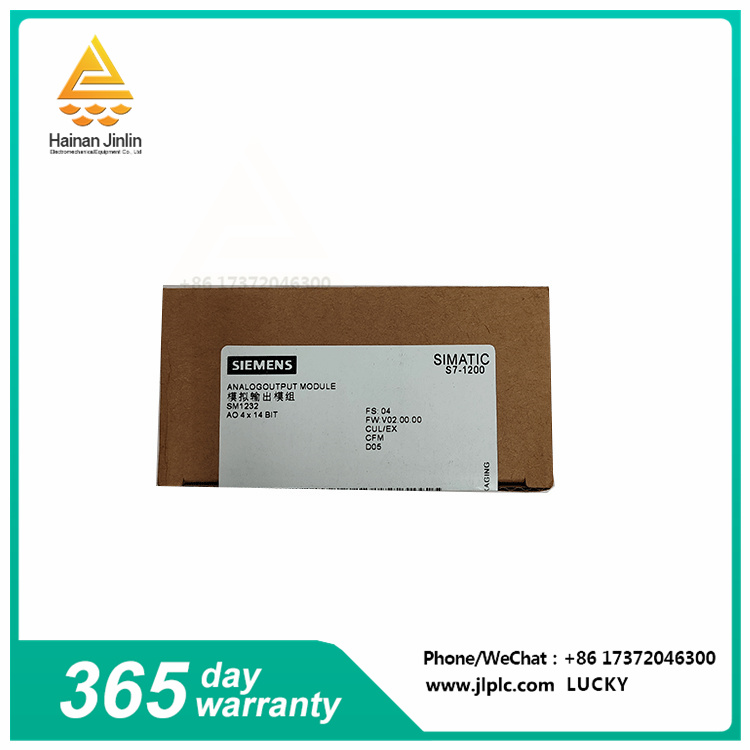
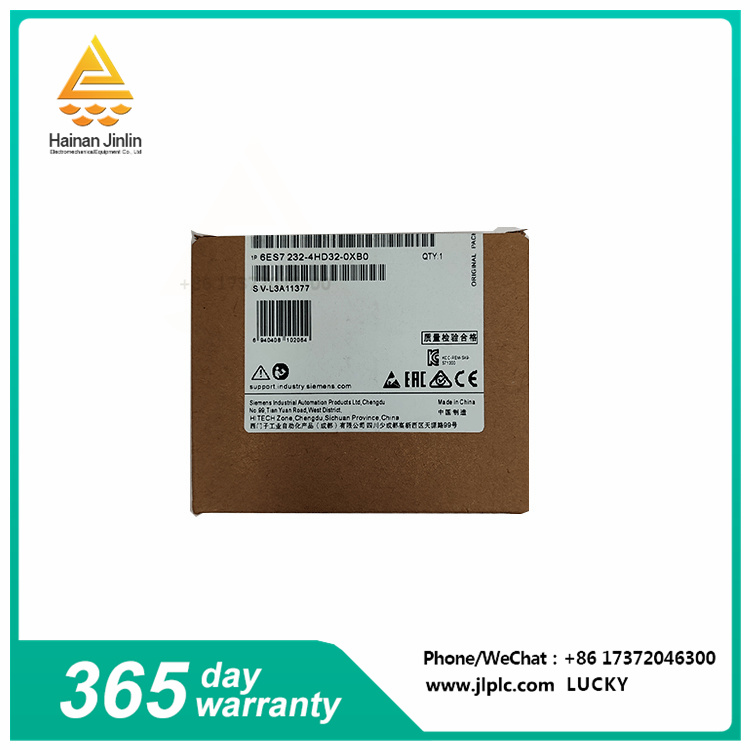
6ES7232-4HD32-0XB0 is an analog output module of Siemens S7-1200 series PLC. It is mainly used to convert the digital signal inside the PLC to the analog signal output, so as to achieve the precise control of the external equipment.
The module has 4 analog output channels, each of which can be configured independently as a voltage output or a current output. Its output voltage ranges from -10V to +10V and its output current ranges from 0 to 20mA. This allows it to adapt to a variety of control needs, such as motor speed control, temperature regulation, etc.
In addition, the 6ES7232-4HD32-0XB0 module also offers high precision and stability. It uses advanced conversion technology and calibration methods to ensure the accuracy and consistency of the output signal. At the same time, the module also has good anti-interference ability, and can run stably in complex industrial environment.
In terms of communication, the module supports communication protocols such as PROFINET and PROFIBUS, which can facilitate data exchange and collaboration with other devices. This allows it to be easily integrated into existing automation systems, improving the overall performance and efficiency of the system.
Overall, the 6ES7232-4HD32-0XB0 is a powerful and stable analog output module suitable for a variety of industrial automation applications. Whether used alone or in conjunction with other devices, it provides users with accurate and reliable control solutions.
Features:
Analog output: The module has four analog output channels. These channels can generate voltage or current signals within a specific range.
Signal type and range: It can support voltage output (usually +/-10V) or current output (usually 0-20 mA or 4-20 mA). The specific range can be configured based on the requirements of the connected device.
Resolution: The module has 13-bit or 14-bit resolution, depending on the output range selected. This means that it can represent simulated values with high precision.
Application: 6ES7232-4HD32-0XB0 is suitable for controlling various industrial equipment that requires analog control signals.
Here are some examples:
Factory Automation:
Control the speed of the variable speed drive (VSD) in the motor.
Use valves to regulate the flow rate of liquids or gases.
Temperature is regulated by controlling heating or cooling elements.
Building Automation:
Dim the lights or control the HVAC system based on sensor readings.


