BASLER A404K Configuration Description:
Model: BASLER A404K
Sensor: CMOS
Split rate: 16 MP
Maximum grid rate: 75 grid/SEC
Interface type: Gigabit Ethernet
Size :29x29x41mm
Spectral response: 400-700 nm
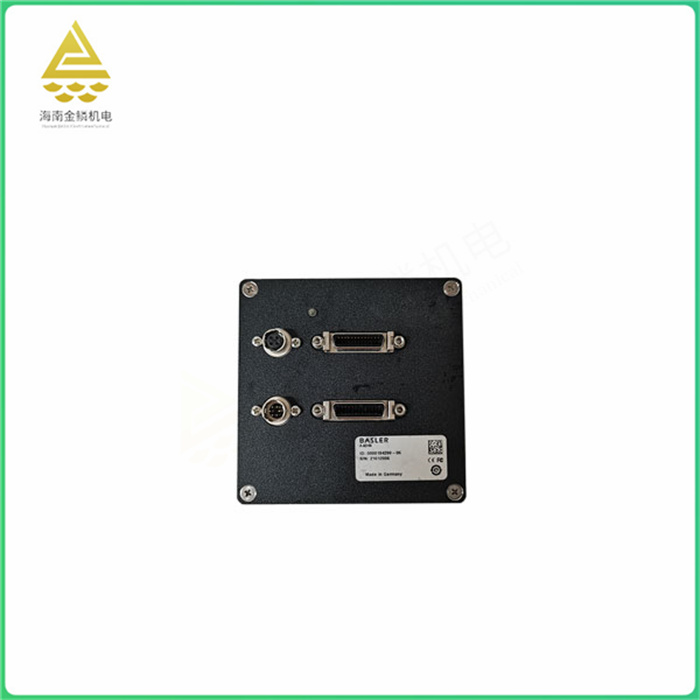
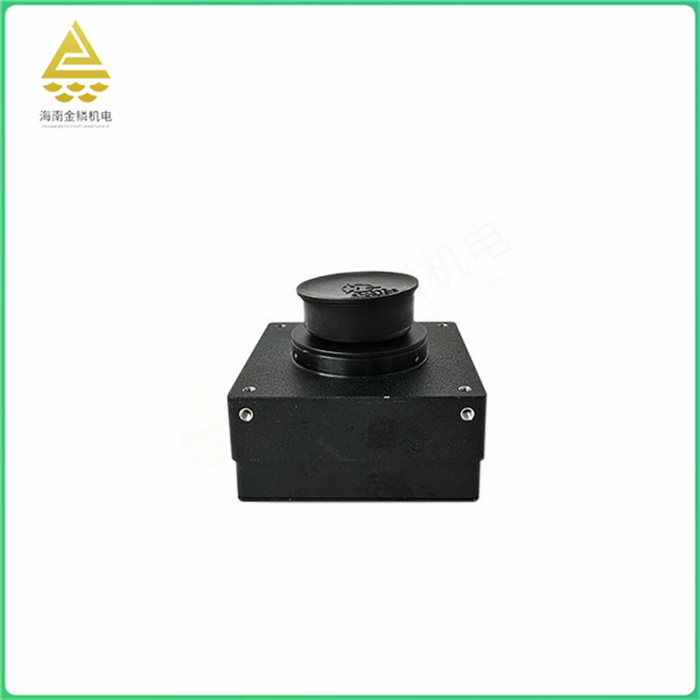
The BASL ER A404K is an industrial camera produced by the German company BASL ER that is commonly used in a variety of industrial vision and image processing applications. These cameras are specifically designed for high performance, resolution and precise image capture and analysis tasks. Here is some information that may be relevant to the BASLER A404K industrial camera:
1. Model and specifications: A404K The model of this camera, usually has specific specifications and configurations, such as resolution, frame rate, interface, etc.
2. Resolution: This type of industrial camera usually offers different resolution options to meet the needs of different applications. Resolution cameras are often used for applications that require accurate image analysis.
3. Frame rate: Frame rate represents the number of images captured by the camera per second. Cameras with high frame rates are suitable for applications that require real-time image capture, such as machine vision and motion control.
4. Interface: Industrial cameras usually provide various interface options, such as GigE Vision, USB3 Vision, Camera Link, etc., in order to connect with different image acquisition systems and computers.
5. Image sensors: These cameras usually use different types of image sensors, such as CCD (charge coupled device) or CMOS (complementary metal oxide semiconductor) sensors, selected according to the application needs.
6. Optical adaptation: Cameras usually need to be used in combination with the appropriate lens and light source to ensure image quality and adapt to the specific scene.
7. Industrial vision applications: BASLER A404K industrial cameras can be used in machine vision, quality control, automated production, medical imaging, scientific research and other applications.
8. Programmability: Some industrial cameras have programmable features so that users can customize image processing and analysis algorithms to meet specific application needs.
The role of German industrial cameras is mainly used for quality detection, position detection and automatic assembly on industrial automated production lines. These cameras are able to detect the quality, position and assembly of products with high precision and efficiency to ensure the accuracy and efficiency of the production process.
German industrial cameras have high resolution, high sensitivity, high speed, high precision and other characteristics, can adapt to a variety of complex and harsh environments. They are widely used in automated production lines, robotics and monitoring, quality control, flow monitoring, pharmaceutical industry, semiconductor inspection, logistics, science and research, biometrics and medical imaging, multimedia, entertainment and sports, ITS intelligent transportation, 3D microscanning of stationary and moving objects, ophthalmology applications, avionics, traffic monitoring, license plate reading, public Security, character recognition, outdoor imaging, public security and detection, military and space applications, manufacturing, microscopy, non-destructive evaluation of sensitive objects, too important battery detection, near infrared imaging, infrared thermal imaging, water or moisture detection, spectral imaging, laser beam analysis and other fields.
German industrial cameras can be connected to computers or other devices through different interfaces (such as USB3.0/3.1 Type C, GigE Vision, CoaXPress, etc.) to achieve high-speed data transmission and processing. At the same time, German industrial cameras also have powerful image processing and analysis functions, which can provide high-precision measurement and detection results, providing strong support for industrial automation and quality control.
German industrial cameras in addition to the above application areas, there are other application areas. For example, they can be applied to drug detection and quality control in the pharmaceutical industry, as well as chip inspection and assembly in the semiconductor industry. In addition, German industrial cameras can also be applied in the medical field of diagnosis and treatment, such as through high-definition image acquisition and accurate analysis, to help doctors carry out early detection and treatment of diseases. In addition, German industrial cameras can also be applied to vehicle detection and monitoring in the field of transportation, as well as monitoring and face recognition in the field of security. In short, German industrial cameras have a wide range of applications in various fields, providing strong support for industrial automation and quality control.


