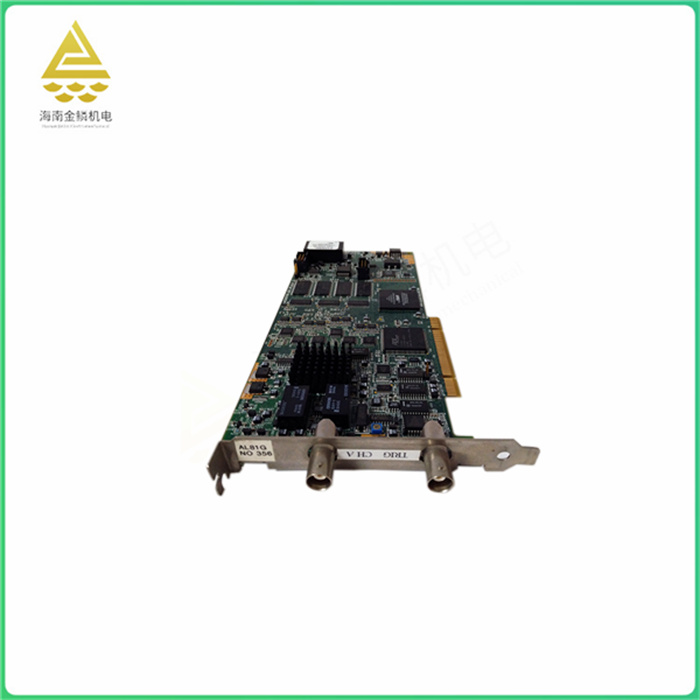
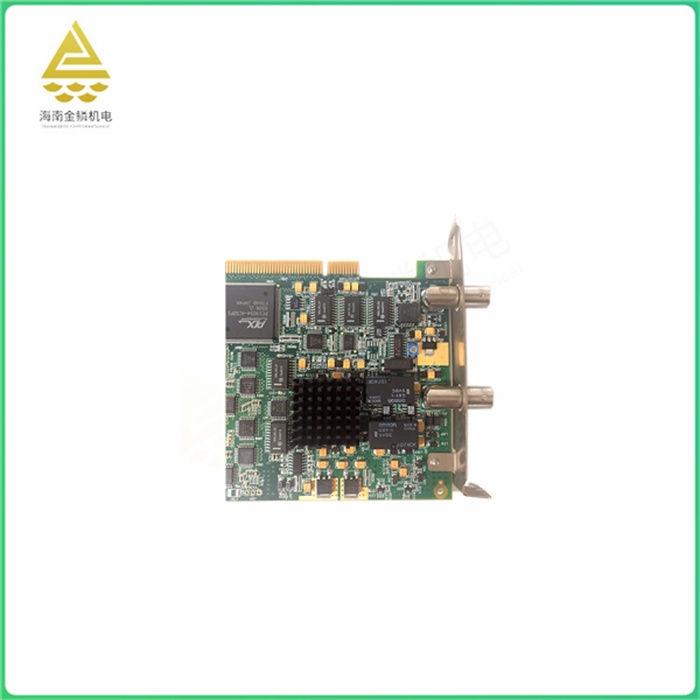
The AL81G is popular in high-speed scans that use high-frequency ultrasonic signals. It is most commonly used to digitize signals from UT340 or other high frequency pulse receivers. It has single-channel digitization with 8-bit resolution and sampling frequencies up to 1 GHz. This provides a useful dynamic range of about 40 dB and is suitable for the digitization of RF signals up to about 200 MHz center frequency. The AL81G has one input, either an orthogonal encoder or a step and direction signal. This feature enables the digitizer to keep up with the motion of the high-speed tracing system.
The system control module is an important part in the car, which is responsible for controlling and coordinating various systems of the vehicle, including the engine, transmission, braking system, air conditioning system, etc.
By collecting the information of various sensors, the system control module accurately controls and adjusts various systems of the vehicle according to preset procedures and control strategies to ensure the safe, stable and efficient operation of the vehicle.
The system control module can also provide corresponding driving modes and driving assistance functions according to the needs of the driver and the driving environment, such as sports mode, comfort mode, automatic parking, etc.
In short, the system control module is an indispensable part of the car, which can realize the intelligent and automatic control of the vehicle and improve the performance and safety of the vehicle.
The characteristics of the system control module mainly include the following aspects:
Integration: The system control module can integrate various systems of the vehicle together to achieve centralized control and coordination, thereby improving the overall performance and safety of the vehicle.
Intelligent: The system control module adopts advanced control strategies and algorithms, which can automatically adjust and control the working parameters of each system according to the operating status of the vehicle and the needs of the driver, so as to achieve intelligent and automatic control.
High reliability: The system control module adopts high reliability hardware and software design, which can ensure stable operation under various complex working conditions and improve the reliability and safety of the vehicle.
Fast response speed: The system control module can quickly respond to various input signals, and can quickly adjust and control according to needs, thereby improving the response speed and handling performance of the vehicle.
Strong scalability: The system control module adopts open architecture and standardized interface design, which can easily expand various functions and peripherals to meet the needs of different models and users.
Energy saving and environmental protection: The system control module can achieve energy saving and emission reduction by optimizing the control algorithm and adjusting the working parameters, thus reducing the impact of the vehicle on the environment.
In short, the system control module is a very important part of the car, which has the characteristics of integration, intelligence, high reliability, fast response, strong scalability, energy saving and environmental protection, which can improve the performance and safety of the vehicle and provide better driving experience for the driver.
The system control module is integrated in the following ways:
Hardware integration: The various system hardware of the vehicle is integrated together, such as the engine, transmission, braking system, air conditioning system, etc., to form a compact control system. This can reduce the use of external lines and connectors and improve the reliability and stability of the system.
Software integration: Integrate various control software into one system to achieve unified control and management. This can be done by using common programming languages and development tools such as C++, Java, etc. Through software integration, software development process can be simplified, and software maintainability and expansibility can be improved.
Network integration: The various systems of the vehicle are integrated together through the network to form a local area network or wide area network. In this way, data sharing and information exchange between various systems can be realized, and the degree of intelligence and automation of vehicles can be improved. At the same time, network integration can also facilitate remote monitoring and management of vehicles.
Interface integration: The interface of various sensors and actuators is integrated together to form a unified interface standard. This can reduce the use of external lines and connectors and improve the reliability and stability of the system. At the same time, the interface integration also makes it easy to replace and upgrade various sensors and actuators.
In short, the system control module is integrated through hardware integration, software integration, network integration and interface integration, so as to improve the overall performance and safety of the vehicle.


