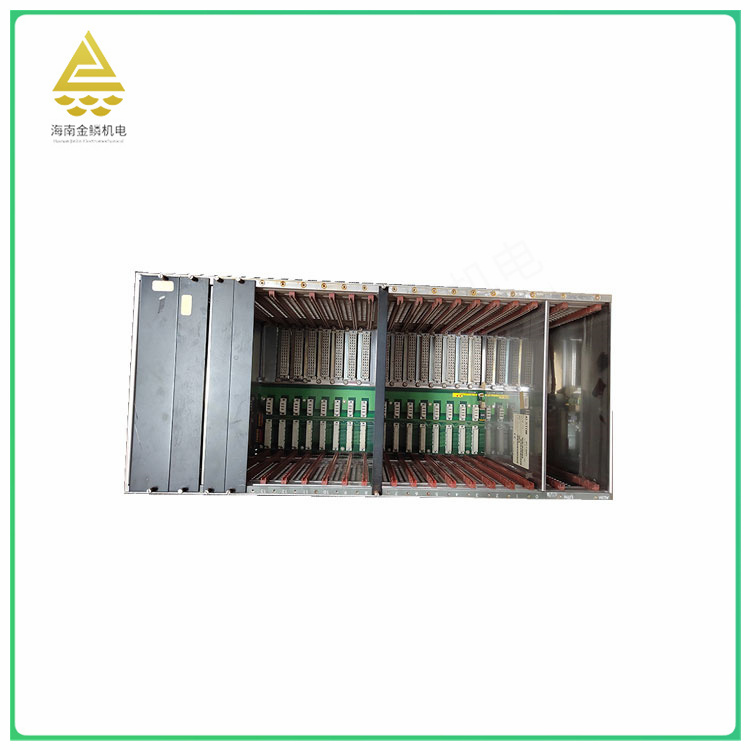
The AM164 is a product model commonly associated with the ALSTOM brand of CPU PLC processors. PLC (Programmable Logic Controller), short for Programmable Logic Controller, is a digital electronic system used to control various types of mechanical equipment in an industrial environment.
The AM164, as an ALSTOM brand PLC processor, may have the following characteristics:
High performance: The AM164 PLC processor may have high processing power and fast execution speed to meet the needs of complex control tasks.
Programmability: It allows users to write and modify control logic according to specific application requirements, thus achieving precise control of mechanical equipment.
Communication capabilities: The AM164 may support a variety of communication protocols, such as Ethernet, RS-485, etc., for data transmission and communication with other devices or systems.
Reliability: In industrial environments, the AM164 PLC processor is likely to be highly reliable and capable of stable operation under harsh operating conditions.
Easy configuration and maintenance: The AM164 may provide a user-friendly interface and tools to facilitate configuration, monitoring, and maintenance.
AM164 PLC processors (or similar models, because the "AM164" model is not widely known, may be a specific manufacturer or project custom model) as a core component of industrial control systems, with a wide range of application scenarios. Here are some areas and scenarios where it could be used:
Manufacturing Industry:
Production line automation: control the operation of assembly lines, packaging lines, welding machines and other equipment.
Material handling: Instruct robots, conveyor belts and automated forklifts in material handling.
Machine tool control: precise control of CNC machine tools, drilling machines, milling machines, etc.
Energy & Utilities:
Water treatment plant: Monitor and control pumps, valves, filters and other equipment.
Power station: Monitor the status and operation of generators, transformers, circuit breakers and other equipment.
Heating and cooling systems: Control the operation of boilers, air conditioners, chillers and other equipment.
Building and Infrastructure:
Building automation: Control lighting, air conditioning, security systems, etc.
Traffic control: Manage traffic lights, railway systems, subway systems, etc.
Water control: gate control, water level monitoring, flood warning, etc.
Agriculture:
Greenhouse control: adjust temperature, humidity, light and other environmental factors.
Irrigation system: Control pumps and valves to achieve water-saving irrigation.
Animal feeding: Monitor feed distribution, environmental control, etc.
Logistics and Transportation:
Warehouse management: Control the operation of shelves, forklifts, conveyor belts and other equipment.
Transport vehicle management: Monitoring the operating status of trucks, trains, ships, etc.
Robotics and Automation Systems:
Robot control: Instructing robots to perform complex operational tasks.
Automated production line: Monitoring production process, quality control, etc.
Process Industry:
Chemical industry: Control of chemical reaction processes, fluid handling, etc.
Food and beverage processing: control of production lines, packaging, quality inspection, etc.
Pharmaceutical industry: Precise control of temperature, pressure, mixing, etc. in the production process.
In all of these application scenarios, the AM164 PLC processor (or similar model) will be responsible for receiving input signals, performing logical operations, outputting control signals, and communicating with other devices and systems to enable automation and intelligent control in industrial environments.