Yaskawa is a well-known provider of industrial automation solutions with a wide range of product lines, including servo drives, inverters, controllers and more. The CACR-SR10BB1BF looks like a specific type of control module or controller from Yaskawa Electric.
Based on Yaskawa's product naming convention, the CACR-SR10BB1BF may be a control module for servo systems. Specifically, it may have the following functions and features:
Servo control: This module may be used to control servo motors, providing precise speed, position and torque control.
High performance: Yaskawa's servo control modules typically have high response speed, high precision and stable control performance for applications requiring fast dynamic response.
Multiple communication interfaces: Support a variety of communication protocols and interfaces, such as EtherCAT, Profinet, Modbus, etc., to facilitate integration and communication with other devices or control systems.
Debugging and monitoring functions: Provides easy-to-use debugging tools and monitoring functions to facilitate parameter setting, status monitoring, and troubleshooting.
Compact and efficient: Compact design, space saving, while having high energy efficiency, in line with the energy saving requirements of industrial automation.
In terms of application areas, CACR-SR10BB1BF may be suitable for various industrial automation applications requiring high-precision servo control, such as machine tools, packaging machinery, material handling, printing machinery, semiconductor and electronic equipment manufacturing.
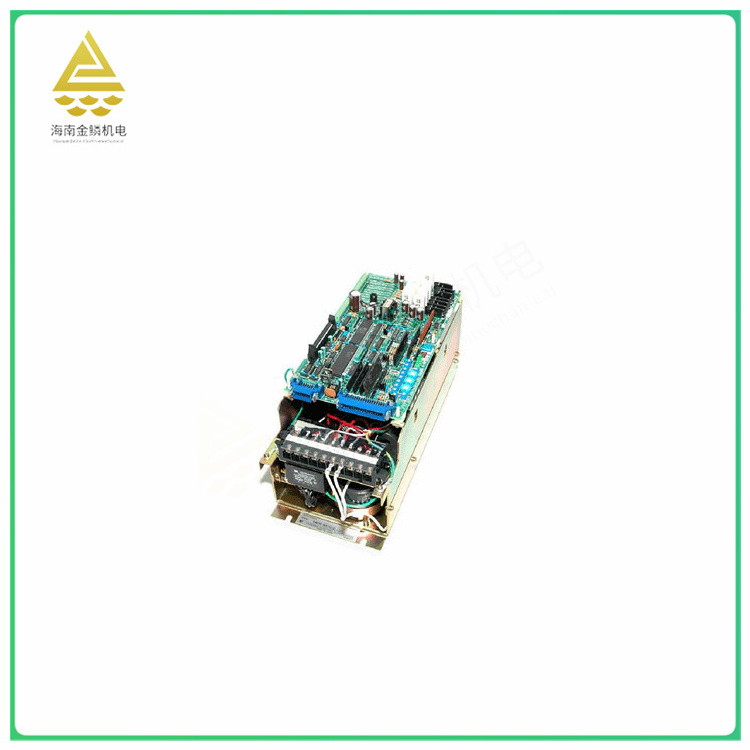
The CACR-SR10BB1BF (assuming this is an actual product model of Yaskawa Electric, although I did not have this specific model information in my last training data) as a servo control module may have some of the following advantages and disadvantages. Please note that these are guesses based on the characteristics of general servo control modules and the usual performance of Yaskawa products, and do not necessarily apply fully to the CACR-SR10BB1BF.
Advantages:
High precision control: Servo control modules are often able to provide high precision speed, position and torque control, which is very important for applications requiring precise motion control.
Fast response: Servo systems typically have fast dynamic response capabilities and can quickly adjust to changing demands, which is critical for automation applications that require rapid response.
Debugging and configuration flexibility: Modern servo control modules often provide a wealth of debugging and configuration options, allowing users to adjust the parameters according to the specific needs of the application to achieve the best performance.
Multiple communication interfaces: supports a variety of communication protocols and interfaces to facilitate integration and communication with other devices or control systems, improving the flexibility and scalability of the system.
Compact and efficient: Servo control modules are typically compact in design, saving space while having high energy efficiency, helping to reduce operating and maintenance costs.
Cons:
Higher cost: Servo control modules are generally more expensive than traditional open-loop control systems because they offer higher accuracy and performance.
Increased complexity: As servo systems require more precise control and debugging, this may increase the complexity of the system, requiring more specialized knowledge and skills to maintain and manage.
Sensitivity to power supply: Servo systems generally require a stable power supply and are sensitive to power fluctuations and disturbances, which may require additional power management measures.
Difficulty in commissioning and configuration: While modern servo control modules offer a wealth of commissioning and configuration options, they can be challenging for those without experience or expertise.