Brand: HONEYWELL
Product name: Programmable controller
Product model: CC-IP0101
Product features: Plug and play program debugging technology installation
A Programmable Logic Controller (PLC) is a digital operational electronic system designed specifically for use in industrial environments. It uses a programmable memory in which the instructions for performing operations such as logical operations, sequence control, timing, counting and arithmetic operations are stored, and various types of mechanical equipment or production processes are controlled through digital or analog input and output.
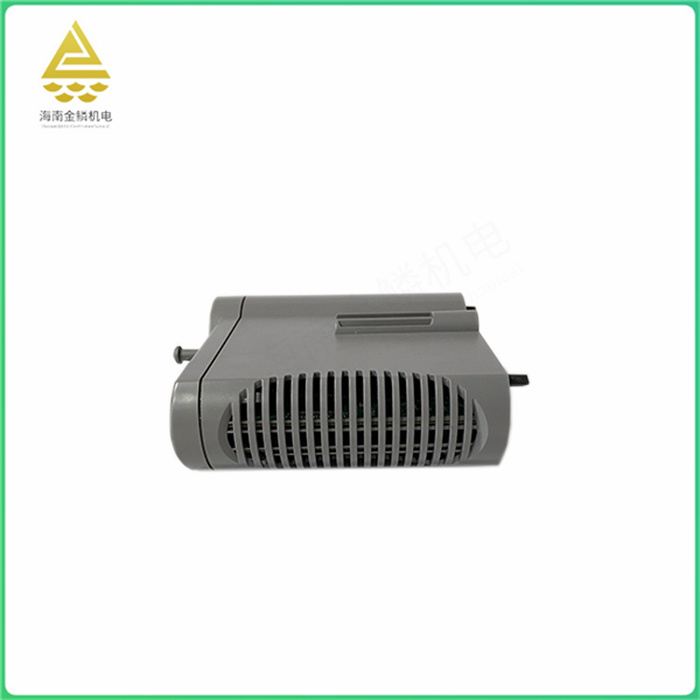
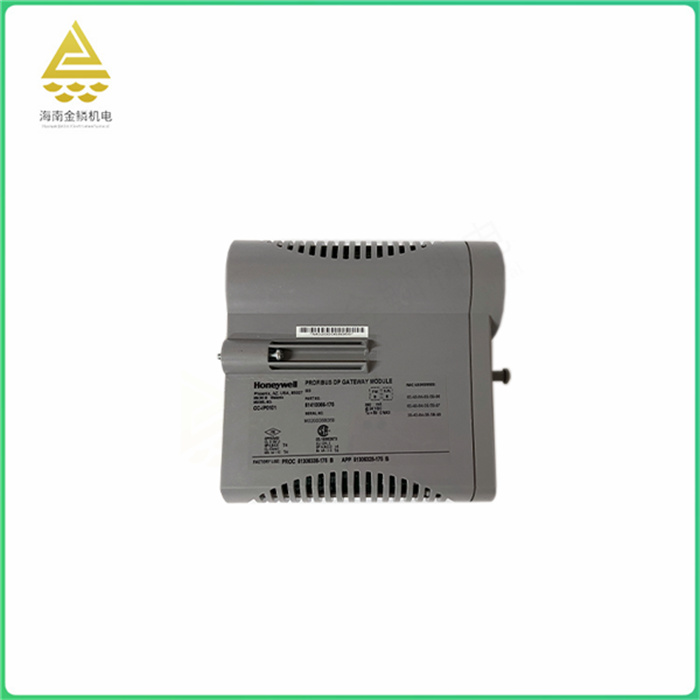
The Programmable Logic Controller (PC or PLC) is an electronic system for digital operation, designed for application in an industrial environment. It uses a programmable memory used to store instructions for the execution of operations such as logical operations and sequence control, timing, counting and arithmetic operations, and controls various types of mechanical equipment or production processes through digital or analog input (I) and output (O) interfaces. Programmable controller is developed on the basis of electrical control technology and computer technology, and gradually developed into a microprocessor as the core, the automation technology, computer technology, communication technology integrated new industrial control device.
PLC is mainly composed of microprocessor (CPU), memory (ROM, RAM), input/output unit (I/O), programmer and power supply. CPU equivalent to the human brain, memory is to store files, the file scan, in the file printed out, this is the function of I/O, quite with the human features, the programmer is used for the preparation of user programs, debugging inspection and monitoring, but also through the keyboard to call and display some of the internal status of the PLC and system parameters. The power supply is the energy source that provides the PLC.
Programmable controller is widely used in the field of industrial automation, it can be controlled according to the preset program, but also can be operated according to the change of the input signal. In the field of industrial automation, programmable controllers are widely used in various production lines, such as robotic arms and automated production lines.
The advantages of a programmable controller (PLC) include:
High reliability: PLC adopts a variety of reliability technologies in hardware design and software programming, such as redundant systems, fault diagnosis, etc., to ensure the stability and reliability of the system.
Strong adaptability: PLC can be flexibly configured according to different control needs, and can adapt to various complex industrial control scenarios.
Easy to program and maintain: PLC uses a programming language that is easy to understand and master, so that users can quickly write and debug programs. At the same time, the maintenance of PLC is also relatively simple, and users can quickly find faults and deal with them through the self-diagnosis function.
Easy to expand: PLC can be easily expanded to accommodate larger scale control needs.
High integration: PLC can integrate a variety of control functions into one module, reducing the complexity and cost of the system.
Strong anti-interference ability: PLC adopts a variety of anti-interference technologies in hardware and software design, which can work stably in harsh industrial environments.
Energy saving and environmental protection: PLC can be optimized according to actual needs to reduce energy waste and environmental pollution.
High security: PLC has a perfect security protection mechanism to prevent illegal access and attacks to ensure the security and stability of the system.
In summary, the programmable controller has the advantages of high reliability, strong adaptability, easy programming and maintenance, easy expansion, high integration, strong anti-interference ability, energy saving and environmental protection, and high safety, so it has been widely used in the field of industrial automation.


