The Yokogawa CP451-10 CPUQ processor module is an industrial automation control system module produced by Yokogawa Corporation, commonly used to monitor and control various industrial processes.
The CPU processor module is one of the core components of the control system Q, which is used to execute the control logic, process the input data, generate the output signal, and coordinate the operation of the entire automation system. These modules usually have high performance processing power and a variety of communication interfaces to achieve connectivity with other devices and systems.
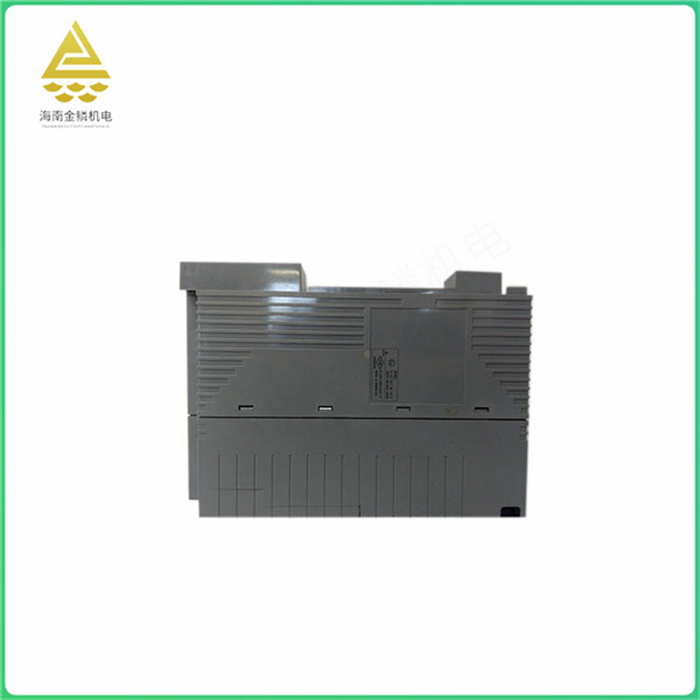
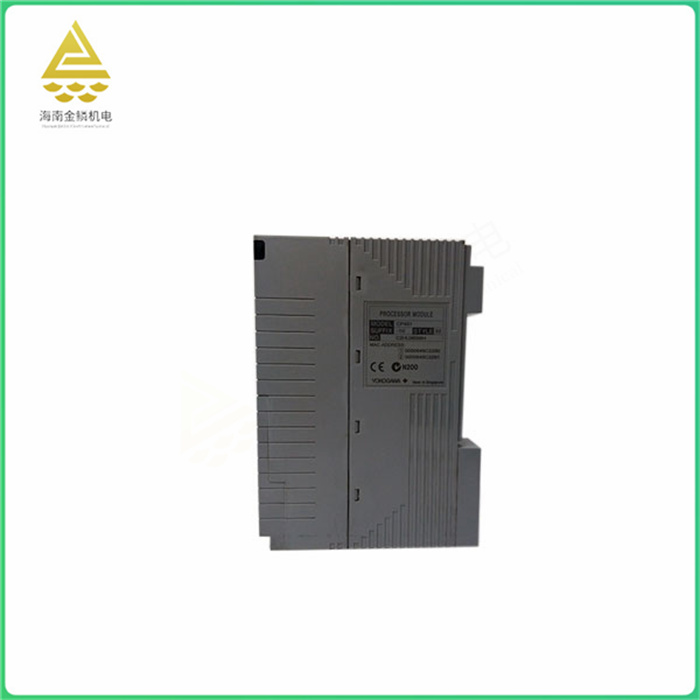
Yokogawa's automation control systems and CPU processor modules are commonly used in chemical, oil and gas, power, manufacturing, pharmaceutical and other industrial sectors. They are used to monitor and optimize production processes, ensure proper operation of equipment, and automate control.
CP451-10 CPU Processor module The following describes the characteristics of the control chart:
Connecting I/O and control blocks You can visualize data flow definitions by connecting a line between I/O and function blocks or between function blocks.
1, Define the order of control block implementation You can determine the implementation priority or execution order in several functional blocks described in the control chart.
2, Mixing of adjustment control and sequence control Adjustment control and sequence control can be mixed in the control chart. The control function can be flexibly configured according to the requirements of the art.
3, the free signal flow between the control charts belongs to the function block of different control charts can be connected to another control chart.
Processor module usually refers to the computer module that contains the CPU (central processing unit), which is responsible for performing the operation and control of the computer system. Processor modules typically have the following characteristics:
Cache: Processor modules usually have a cache, which can store frequently accessed data in high-speed memory, thereby improving access speed and efficiency.
Register: Processor modules typically have a register, which is a kind of high-speed memory used to store data and state that needs to be processed inside the CPU.
Bus: Processor modules typically have a bus (Bus), which is a communication channel used to pass data and instructions between the various components inside the CPU.
Floating-Point units: Processor modules often have floating-point units, which are used to handle floating-point operations, including real and complex numbers.
Execution units: Processor modules typically have execution units, which are responsible for performing arithmetic and logic operations, storing data in registers, and handling branch and jump operations.
In short, the processor module is a crucial part of the computer, which contains components such as cache, register, bus, floating point number unit and execution unit, which can improve the performance and efficiency of the computer.
The functions of the processor module mainly include the following aspects:
Interpret computer instructions: Processor modules are able to interpret computer instructions and convert them into executable actions. This is the basis of computing.
Processing data in computer software: The processor module can process data in computer software, including data reading, writing, calculation and other operations.
Control time and processing data: The processor module can control the time and data processing speed of the computer to ensure that the computer can efficiently complete the task.
Perform operations: The processor module can perform a variety of computer operations, including arithmetic operations, logic operations, branch jumps, etc., to complete a variety of complex tasks.
Store data: Processor modules usually have memory such as caches and registers, which can store frequently accessed data, thereby improving the computing speed and efficiency of the computer.
In short, the processor module is the core part of the computer, and its functions include interpreting instructions, processing data, controlling time, performing operations and storing data, etc., which can improve the performance and efficiency of the computer.


