● Servo drive controller
● Series :02
● Version :3
● Type current :40 amps
● Voltage category :7
● Input :200-480 V AC +-10%/ 16 A / 50-60 Hz
● Output :480 V AC voltage
REXROTH DKC02.3-040-7-FW AC servo amplifier drive controller
DKC02.3-040-7-FW produced by Bosch GMBH is the AC servo of DKC series
Amplifier drive controller. The rated current of the DKC02.3-040-7-FW is 40A, DC
The bus nominal voltage is DC 700V. This servo drive has a version 3 and comes with
Standard firmware.
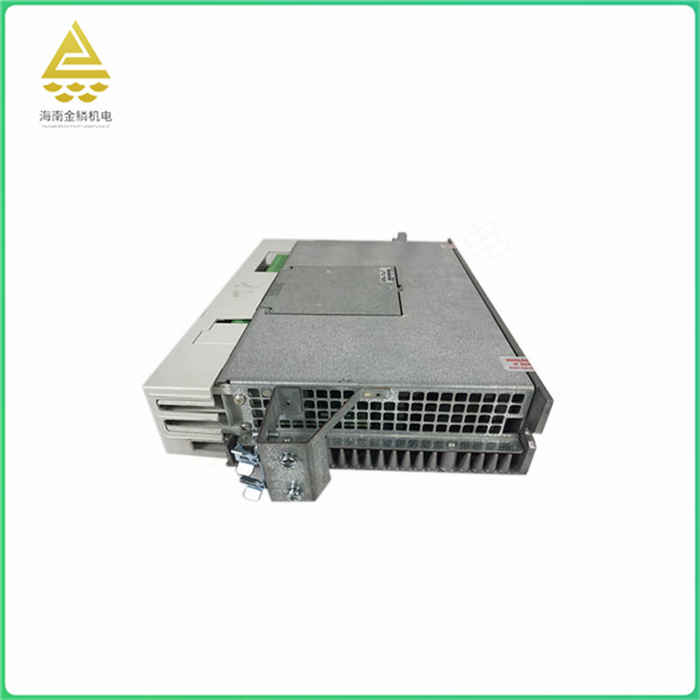
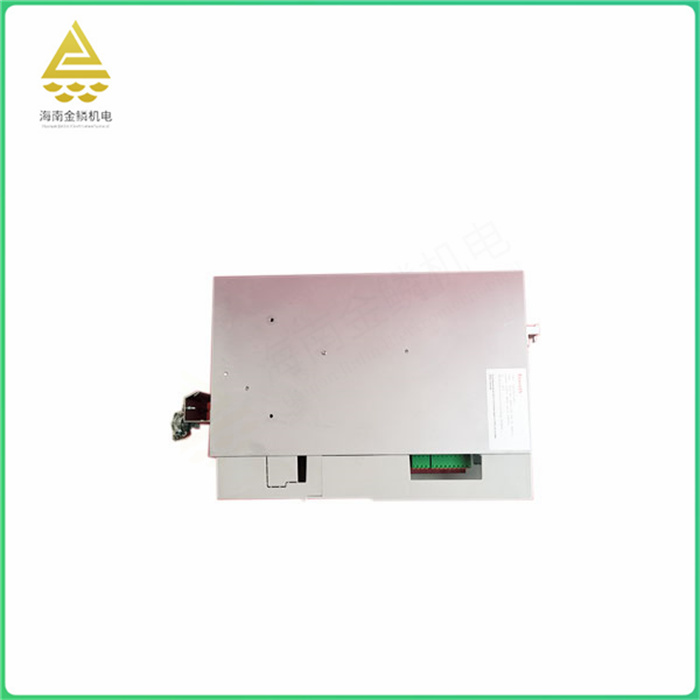
The DKC02.3-040-7-FW Drive controller is part of the ECODRIVE03 drive package. The ECODRIVE03 is an intelligent automation system with excellent features for both single-axis and multi-axis control tasks. The specific features of DKC02.3-040-7-FW may include:
It can drive single-axis and multi-axis motion, with excellent mechanical properties and stable electrical properties.
It can be applied to a variety of different application scenarios, including but not limited to power, petroleum, mine lifting, port, heating, gas, water supply, sewage treatment, metallurgy, paper making, textile, chemical industry, water conservancy and other modern industrial fields.
The use of advanced flux vector control allows the motor to be quickly adjusted without affecting the start speed, and to maintain mechanical and electrical characteristics.
The DKC02.3-040-7-FW also uses a reduced instruction set computer RISC microprocessor with a new in-line automatic adjustment function, which allows the motor to be adjusted quickly without affecting the start-up speed.
It should be noted that for industrial automation equipment such as DKC02.3-040-7-FW, its characteristics and performance may vary according to the specific application and working environment, so in actual use, it is necessary to select and use according to the specific situation.
The DKC02.3-040-7-FW, as part of the Indramat DKC series, is a digital drive controller produced by Rexroth Bosch. It is mainly used for single-axis and multi-axis control tasks with excellent features.
In specific application scenarios, DKC02.3-040-7-FW can drive a variety of industrial automation equipment, including but not limited to power, petroleum, mine lifting, port, heating, gas, water supply, sewage treatment, metallurgy, paper, textile, chemical, water conservancy and other modern industrial fields.
In addition, the DKC02.3-040-7-FW also uses advanced flux vector control, which allows the motor to be adjusted quickly without affecting the start speed and maintain mechanical and electrical characteristics. This control mode enables it to play an excellent performance in a variety of modern high-precision manufacturing and process control.
As for the ECODRIVE03 drive kit, it is an intelligent automation system from Indramat with excellent features for both single-axis and multi-axis control tasks. Therefore, the ECODRIVE03 drive kit can also be used in a variety of industrial automation equipment requiring single or multi-axis control.
In general, the DKC02.3-040-7-FW and ECODRIVE03 drive packages are widely used in a variety of modern industrial drive control solutions. Application scenarios may vary according to actual requirements and device performance.
The drive controller is one of the key controllers of electric vehicles, also known as the motor controller or electronic control. Its main function is to receive the torque message instructions issued by the vehicle controller, and then control the speed and steering of the drive motor, while in the process of energy recovery, the motor controller also needs to rectify the alternating current generated by the secondary torque of the drive motor to charge back to the power battery.
The driver controller is usually composed of a microprocessor, a power semiconductor, a sensor, a communication interface and other components. Among them, the microprocessor is the core component of the controller, which is used to process the control instructions and the data fed back by the sensor, and control the state of the power semiconductor switch. The power semiconductor is the main output component of the controller, which is used to control the output power of the drive motor. Sensors are used to monitor motor speed, torque, temperature and other parameters to ensure the safe operation of the motor. The communication interface is used for data exchange and communication with the vehicle controller and other external devices.
In addition, the drive controller has the following functions:
Drive motor rotation: The output power of the drive motor is controlled through the power semiconductor to realize the rotation of the motor.
Control the motor steering and speed: according to the torque message instruction issued by the vehicle controller, the drive controller can control the motor steering and speed, so as to achieve the vehicle acceleration, deceleration and steering functions.
Energy recovery: under braking or coasting conditions, the drive motor can operate as a generator, converting the braking energy into electricity and charging it back to the power battery to improve energy utilization efficiency.
Overcurrent protection: When the current is too large, the overcurrent protection circuit will act to stop the motor to avoid the harm of overcurrent to the motor and the controller.
Fault protection: When the drive controller detects a fault, it will take appropriate protective measures, such as cutting off the output current, cutting off the power battery output, etc., to avoid expanding the fault or causing injury to the vehicle and personnel.
Data monitoring and transmission: The drive controller can monitor the operating status of the motor and related parameters (such as speed, torque, temperature, etc.) and transmit this data to the vehicle controller or other external devices for analyzing and optimizing the performance and safety of the vehicle.
Communication with other controllers: The drive controller needs to exchange data and communicate with other controllers, such as the vehicle controller, the battery management system, to coordinate and control the operation of the vehicle.
In short, the drive controller is an important part of the electric vehicle, responsible for the control and monitoring of the drive motor, to ensure the safe, stable and efficient operation of the vehicle.


