Brand: GE
Model: DS200DCFBG1BGB
Product name: Power control board
Product width: 53 mm
Product height: 125 mm
Product net depth/length: 260 mm
Net weight: 0.7 kg
● Input voltage range: 24V DC
● Output voltage range: 24V DC
● Maximum input current: 500mA
● Maximum output current: 500mA
● Operating temperature range: -40°C to 70°C
● Storage temperature range: 40°C to 85°C
● Size: 140mm x 94mm x 30mm (L x W x H)
● Weight: 250g
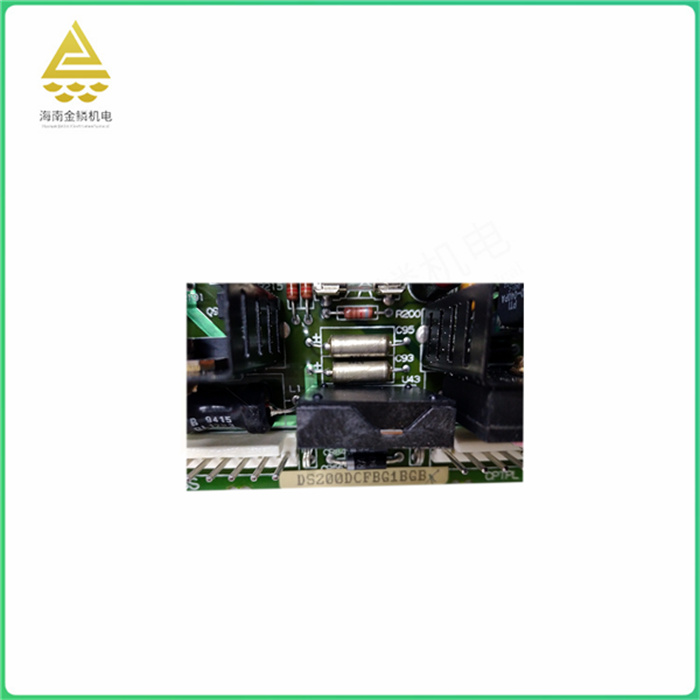
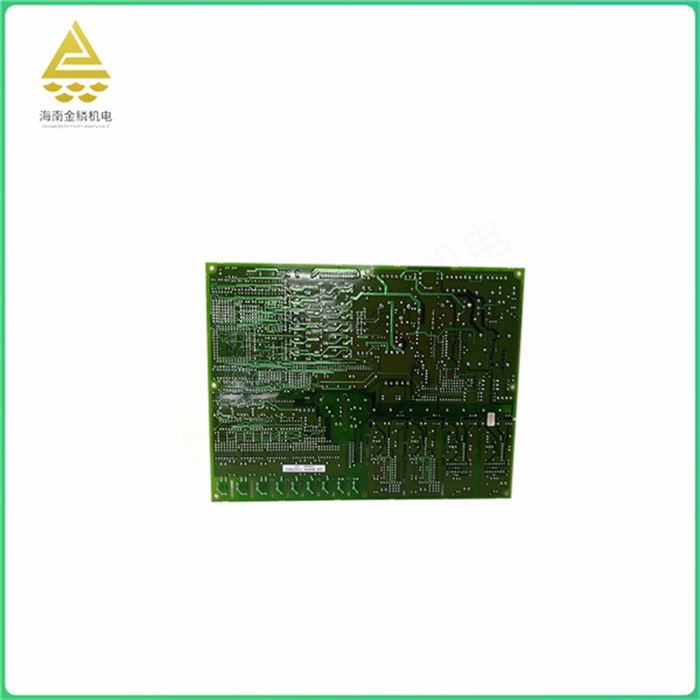
DS200DCFBG1 B is a power supply board produced by Tong Electric Company for the Mark V board series. AC2000, CB2000, DC2000, FC2000, ME2000 and EX2000 series machines can install the board in the drive. When installed, this card can provide control level power and chassis fan power to the lane. Rated voltages between 38 and 115 volts can be supplied directly to the board via a control power transformer. The frequency of the board depends on the input voltage, but can range from 0 to 500 KHZ.
The current feedback card is a PCB board component that has the following characteristics:
It uses a pulse width modulation source to limit current feedback.
It consists of three slightly different but still very similar sections, divided by a nearly blank section on the surface of the board.
The nearly empty board area has six resistors, test points, plug-in connectors and two 3-bit plug connectors, as well as an MOV.
These three similar areas each have three transistors, several integrated circuits, an LED indicator, a heat sink, and two high-voltage electrolytic capacitors.
Each section also has various resistors, ceramic capacitors, and several other connectors.
The current feedback card is part of the GE 18 pulse non-regenerative driver load cabinet blower assembly.
The current feedback card has the following advantages:
Improve the stability of the motor: the current feedback card can dynamically adjust the output signal according to the actual load of the motor, avoid the motor stall, overload and other problems, improve the stability and reliability of the motor.
Improve the efficiency of the motor: The current feedback card can dynamically adjust the output signal according to the load situation to maximize the efficiency of the motor and reduce energy consumption.
Improve production efficiency and quality: The current feedback card can achieve accurate control of the motor, avoiding the decline in production efficiency and product quality problems caused by improper motor control. At the same time, because the system has the characteristics of high precision and high reliability, it is suitable for various industrial automation occasions, and can bring greater convenience and benefits to industrial production.
Reduced electromagnetic interference: The current feedback card does not arc and bounce during the switching process, so electromagnetic interference can be reduced.
In short, the current feedback card is an excellent control element, which can achieve accurate control of the motor, improve the operating efficiency and stability of the motor, and is suitable for various industrial automation occasions.
Current feedback cards are usually used in circuits that require large output currents, such as high-power power supplies, power amplifiers, etc. In these application scenarios, it is necessary to precisely control and adjust the output current to avoid damage to the circuit caused by current shock. In addition, the current feedback card is also widely used in high-precision control scenarios, torque control scenarios and constant speed control scenarios. For example, in precision machining, medical equipment and other scenarios that need to achieve high precision control, the use of current feedback function can make the control more accurate; In the machine tools, printing equipment and other need to achieve accurate torque control scene, the use of current feedback function can achieve more accurate torque control, improve work efficiency; In scenarios where the motor needs to be kept at a constant speed, such as fans and pumps, the current feedback function can maintain more accurate speed control.


