The DS200DCFBG1BJB is a large rectangular circuit board with yuan mounted on the surface
A piece. Included are seven 4-bit DIP switching devices and 12 configurable jumpers. Six DIP open
The off - off is located on one side of the board. These are used to scale or change many different inputs.
For example, the No. 4 switch (SW4) is used to regulate the voltage applied to the VCO output bridge circuit.
The board also has a neon light to indicate a blown fuse on a 15-volt AC wire, and
There are two LED indicators for the + 24 volt DC line and -24 volt DC line
The fuse is blown.
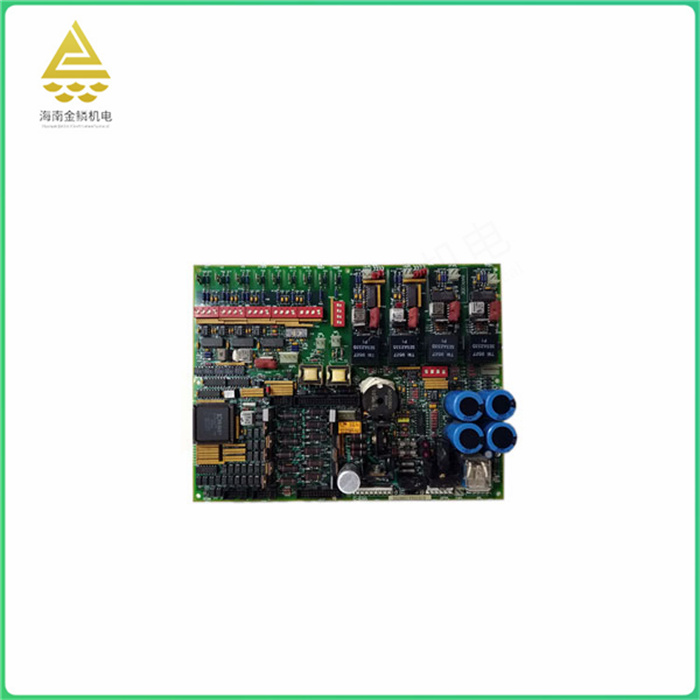
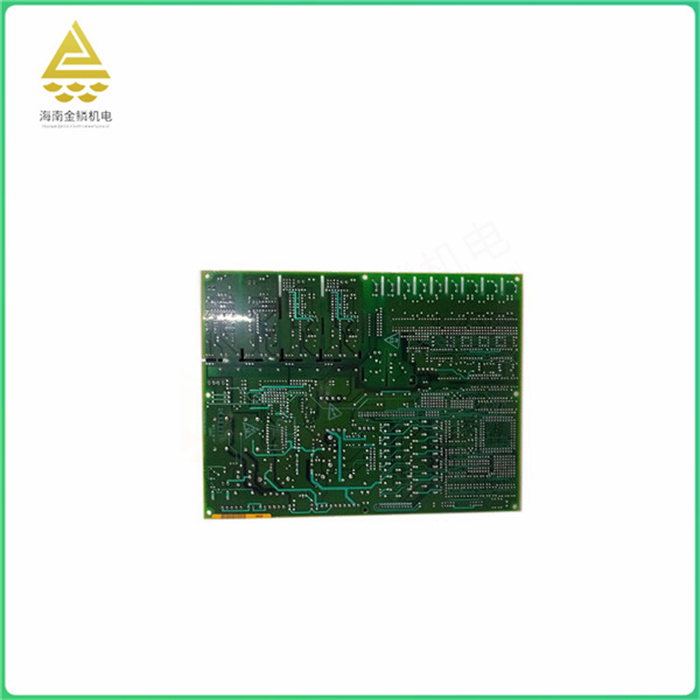
The DS200DCFBG1BJB is a board assembly for GE turbine and excitation control with a variety of board assemblies and test points to check voltage signals. A fuse on this board is used to protect the circuit board, while two rear coaxial (BNC) connectors are used to connect other devices. The card requires a +5 545 mA (typical) power supply, the storage temperature must be maintained between -40 and 186°F, and the operating temperature must be maintained between 32 and 127°F. The storage temperature may be low because the device is not running during storage and therefore does not generate any heat.
The GE DS200DCFBG1BJB is a thermocouple module commonly used in industrial automation 9 and control systems. Here are some basic information about this module and possible areas of product operations:
1. Manufacturer: GE (General Electric) is a global industrial conglomerate that offers a wide range of industrial automation and control systems Q products.
2. Model: DS200DCFBG1BJB This thermocouple module model or model code. This model number is often used to uniquely identify this particular module.
3. Thermocouple module: Thermocouple is a kind of sensor used to measure temperature, which works based on voltage changes caused by temperature changes. This module may be used to connect thermocouple sensing
To measure the temperature and transmit these temperature data to the control system.
4. Can: The main function of this module is to receive and process the output signal of the thermocouple sensor, convert it into a digital signal or analog signal, and transmit the temperature data to the monitoring or
In the control system. It can also provide monitoring and diagnostic functions for sensor status.
5. Connection and installation: The installation of this module usually requires the proper connection of the thermocouple sensor to the module and the appropriate electrical wiring. This helps ensure that the temperature is accurately measured and transmitted
Data.
6. Application fields: Thermocouple modules are widely used in various industrial fields, especially in process control and monitoring applications that require accurate temperature measurement. For example, in the chemical industry, electric carbide
Thermocouple sensors and modules are commonly used in oil and gas, manufacturing and other fields to monitor and control temperature to ensure the stability and safety of production processes.
Test points for board components typically include the following:
Connection test: Test whether each connection of the circuit board components is normal, whether there is a break, short circuit and other problems.
Power test: Test whether the power supply voltage of the circuit board component is normal, whether there is overvoltage, undervoltage and other problems.
Functional test: Test whether the function of the circuit board components is normal, such as whether the input and output meet the design requirements.
Performance test: Test whether the performance indicators of the circuit board components meet the design requirements, such as frequency response, distortion degree, etc.
Compatibility test: Tests whether the board components can connect and work with other devices or systems.
Reliability testing: Tests the stability and reliability of circuit board components under different environmental conditions, such as temperature, humidity, vibration, etc.
Safety test: Test circuit board components to meet safety standards, such as overcurrent protection, overvoltage protection, etc.
These test points can ensure the quality and performance of the board components, ensuring their stability and reliability in practical applications.
The characteristics of circuit board components include the following aspects:
High density: The circuit board component is composed of multiple layers of flexible materials and has high density characteristics, which can realize the manufacture of large area wiring and small size devices.
Light weight: The light weight of the circuit board components can reduce the overall weight of the electronic device and improve the mobility and portability of the device.
High flexibility: the circuit board components can be arbitrarily moved and expanded according to the requirements of the spatial layout, so as to realize the three-dimensional assembly of the circuit board, making the design and production of electronic equipment more flexible.
High reliability: The circuit board component has good electrical connection and mechanical support, which can ensure the stability and reliability of electronic equipment.
Controllable electrical parameters: capacitive and inductance parameters, characteristic impedance, attenuation and other parameters of circuit board components can be controlled through material selection and structural design, so as to achieve the performance optimization of various electronic devices.
Production standardization: The production of circuit board components has good standardization characteristics, and standardized design, production and testing processes can be used to improve production efficiency and product quality.
Strong adaptability: Circuit board components can be customized according to different electronic equipment needs to meet different application scenarios.
In general, circuit board components have the characteristics of high density, light weight, high flexibility, high reliability, controllable electrical parameters, standardized production, strong adaptability, etc., and are widely used in various electronic equipment and systems.


