The GE DS200SIOBH1ABA is a modular digital input/output module. The module has high reliability and sensitivity and can be used in various industrial automation systems. To scare is the module's technical specifications and related information:
● Input voltage: 24VDC
● Output voltage: 24VDC
● Input points: 16
● Output points: 16
● Operating temperature range: -40°C ~ +70*C
● Power consumption: 5W
● Size: 140mm x 70mm x 35mm
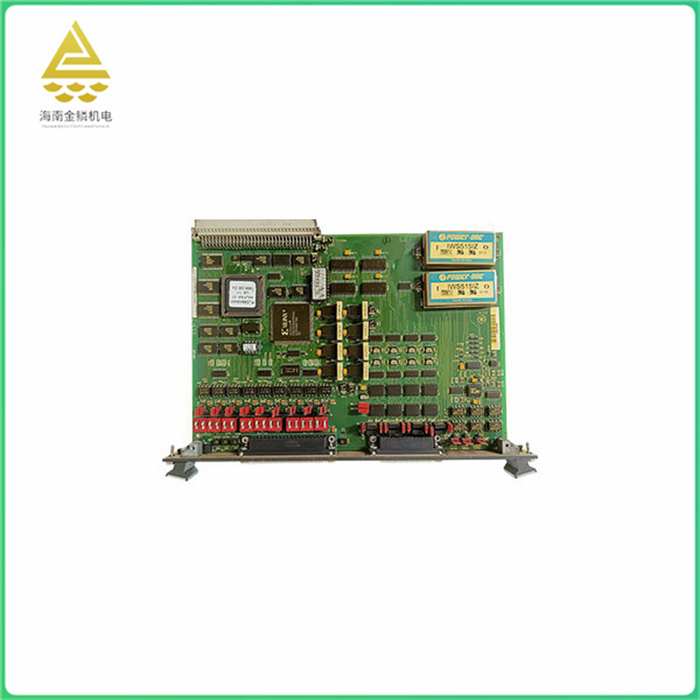
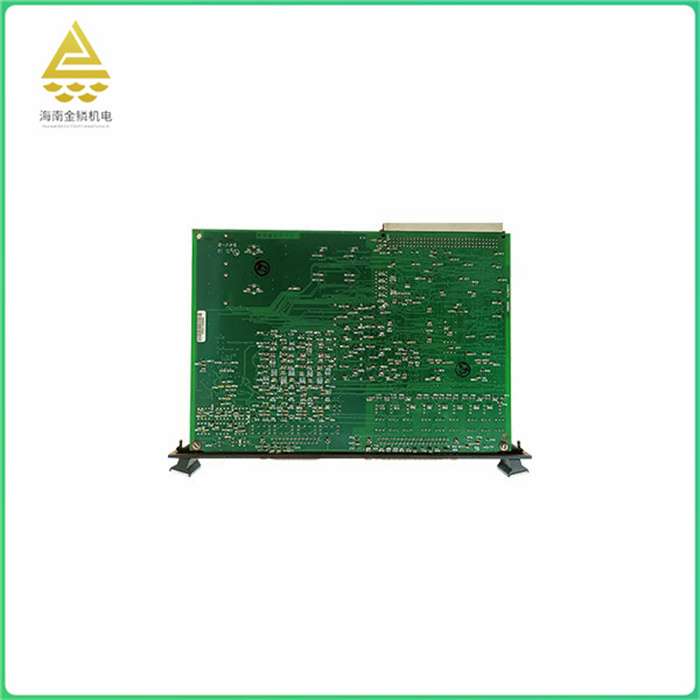
GE DS200SIOBH1ABA 1/0 Product Details:
Usage: GE DS200SIOBH1ABA I/O control board is mainly used in industrial automation systems to monitor and control various input and output signals. It can work with sensors, actuators, motors and others
Devices communicate to enable a variety of automated tasks.
Input/output: This control board usually has multiple input channels and output channels, can accept digital and analog signal input, and provide digital signal output. Different types of signals can be processed, for example
Switching signal, analog sensor signal, voltage signal, etc.
Communication interface: The GE DS200SIOBH1ABA I/0 control board is usually equipped with a variety of communication interfaces for data exchange with other control systems or computers. These interfaces can include Ethernet and string
Line communication interface (such as RS-232, RS-485, etc.).
Industry standards: This I/O board usually follows industry standards to ensure that it is compatible with a wide range of industrial equipment and systems.
Process control: Users can often write programs or configure parameters to define how the control board handles input signals and generate output signals as needed. This makes it very flexible and adaptable to different applications
Needs.
Applications: GE DS200SIOBH1ABA I/O control boards are widely used in industrial automation and control systems, including manufacturing, energy, transportation, building automation, etc.
The characteristics of remote sensor signals can be summarized as follows:
Analog signal and digital signal: The sensor output signal can be analog signal or digital signal. The analog signal is a continuous signal, and its value changes continuously in time. A digital signal is a discrete signal whose value is discrete in both time and amplitude.
Amplitude, frequency and phase: The signal output by the sensor has the characteristics of amplitude, frequency and phase. Amplitude refers to the size of the signal, frequency refers to the rate at which the signal changes, and phase refers to the relative position of the signal waveform shape.
Noise and signal-to-noise ratio: The sensor output signal will contain noise, noise is random interference signal irregular fluctuations. The signal-to-noise ratio is the ratio of signal to noise and is used to describe the clarity and reliability of a signal. The higher the signal-to-noise ratio, the clearer and more reliable the signal.
Transmission delay: Because remote sensors need to transmit data to a central controller or data center, there is a certain delay in signal transmission.
Signal attenuation: Due to the long transmission distance, the signal may be attenuated during transmission, resulting in a weakening of the signal strength received by the receiving end.
Environmental interference: Remote sensors are usually in a more complex environment, such as high temperature, low temperature, high humidity and other harsh environments, so the signal is susceptible to interference.
Data compression and coding: In order to reduce the amount of data transmitted and improve the transmission efficiency, the sensor data is usually compressed and encoded.
Fault diagnosis and maintenance: For remote sensors, it is necessary to carry out regular fault diagnosis and maintenance on the sensor itself and its transmission line to ensure the accuracy and reliability of data.
In general, the remote sensor signal has a variety of characteristics, including analog/digital signal conversion, amplitude, frequency and phase characteristics, but also there are noise interference, transmission delay, signal attenuation and other problems, these problems need to be processed and analyzed to ensure the normal operation of the remote sensor.


