EPQ96-2 DEIF Technical specifications
● Electronic governor control
● Setting of integral time such as change gear box)
● Adjustment of output signal
Offset adjustment
● Manual/automatic mode
● Analog and digital output
● Convert J1939 CAN input to analog or PWM output
●Q96 panel mounting
EPQ96-2 is a digitally controlled electronic device that replaces the ordinary motor potentiometer to control the electronic governor.
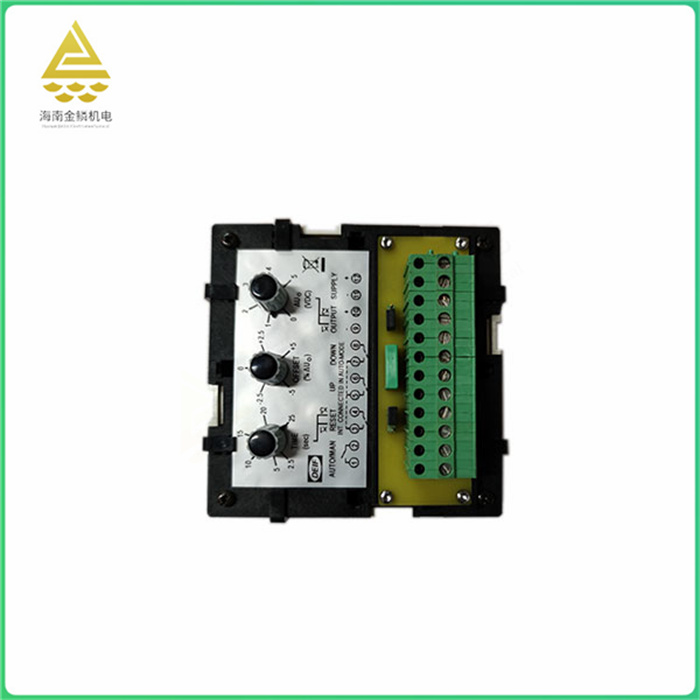
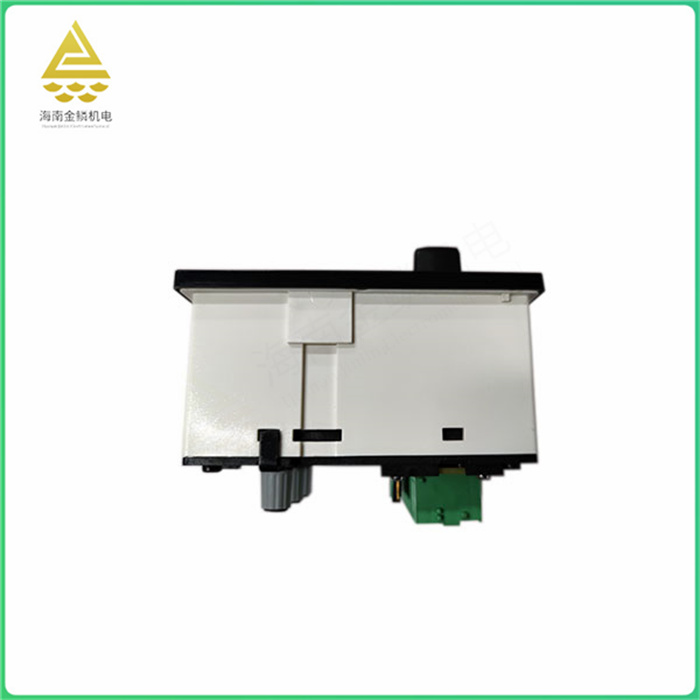
EPQ96-2 is a digitally controlled electronic device that replaces the ordinary motor potentiometer to control the electronic governor. The unit has both manual and automatic mode options and converts the relay output of the PI controller into a control voltage/current or PWM signal as input to the electronic governor. The EPQ96-2 also had a 1939 analog converter. In the event of a drop in the supply voltage, the potentiometer automatically resets to the adjusted preset value or, after reconnecting to the supply voltage, to the same value as it read before the drop.
EPQ96-2 is an electronic potentiometer, a digital controlled electronic device. It can be used as an alternative to normal motor dividers and is managed as a digital controller unit. The EPQ96-2 integrates an electronic governor assembly for a regulated device with stable fittings and simple employment, allowing for minimal maintenance practices. In addition, the unit has manual and automatic mode options and converts the relay output of the PI controller into a control voltage/current or PWM signal as input to the electronic governor. The EPQ96-2 also features a J1939 analog converter. In the event of a drop in the supply voltage, the potentiometer automatically resets to the adjusted preset value or, after reconnecting to the supply voltage, to the same value as it read before the drop.
An electronic potentiometer is an adjustable electronic component that can be used in a variety of different applications. Its core function is to adjust the current or voltage in the circuit by changing the resistance value. The following are the main functions of electronic potentiometers:
Adjust the current: By changing the resistance value of the potentiometer, you can adjust the current in the circuit, so as to control the working state of the circuit.
Regulating voltage: Potentiometers can be used to regulate the voltage value in the circuit, for example, in the power supply circuit, by adjusting the resistance value of the potentiometer can adjust the output voltage.
Voltage division: Potentiometers can be used to achieve the voltage division function in the circuit, dividing the input voltage into different proportional outputs.
Adjust the brightness of the light: In the light regulation circuit, the potentiometer can be used to adjust the brightness of the light, by changing the resistance value in the circuit to control the current size, so as to adjust the brightness of the light.
In addition, electronic potentiometers can also achieve other functions, such as audio control, temperature control, etc. At the same time, it can also be used as a three-terminal or two-terminal element, as a variable resistor.
An electronic potentiometer is a tunable resistor implemented using electronic technology that has the following advantages:
High adjustment accuracy: The adjustment accuracy of the electronic potentiometer is high, which can achieve accurate resistance value adjustment, and is suitable for application scenarios that require high precision resistance value adjustment.
No mechanical wear: Electronic potentiometers have no mechanical wear problems, so they have a long service life and reliability.
No noise: The electronic potentiometer has no mechanical noise, so it will not cause noise interference during use.
Data readability: The electronic potentiometer has a data readability function, which can control the size of the resistance value through the digital input signal, and can also read the current resistance value through the digital signal.
With multi-level quantity storage function: electronic potentiometer has multi-level quantity storage function, which can store multiple different resistance values, suitable for application scenarios that need to remember multiple resistance values.
Small size, light weight: electronic potentiometer small size, light weight, easy to carry and use.
Easy integration: Electronic potentiometers are easy to integrate into circuits and can be easily used with other electronic components.
In short, the electronic potentiometer has the advantages of high accuracy, no mechanical wear, no noise, data readability, multi-level storage function, small size, light weight and easy integration, etc., and is widely used in various application scenarios requiring high-precision resistance value adjustment.
As a kind of adjustable electronic component, electronic potentiometer is widely used in various application scenarios. The following are some typical application scenarios for electronic potentiometers:
Sound system: In a sound system, electronic potentiometers can be used to adjust parameters such as volume and timbre. By changing the resistance value of the potentiometer, the size of the current in the circuit can be controlled, thus changing the size and timbre of the sound.
Televisions and computer monitors: In televisions and computer monitors, electronic potentiometers can be used to adjust parameters such as screen brightness and contrast. By changing the resistance value of the potentiometer, the amount of current in the circuit can be controlled, thus changing the brightness and contrast of the screen.
Computer motherboard: On a computer motherboard, electronic potentiometers can be used to adjust parameters such as CPU voltage and clock frequency. By changing the resistance value of the potentiometer, parameters such as voltage and frequency on the motherboard can be controlled to optimize the performance of the computer.
Lighting system: In the lighting system, electronic potentiometers can be used to adjust parameters such as light brightness and color. By changing the resistance value of the potentiometer, the amount of current in the circuit can be controlled, thus changing the brightness and color of the light.
Mechanical equipment: In mechanical equipment, electronic potentiometers can be used to adjust parameters such as motor speed. By changing the resistance value of the potentiometer, the current in the circuit can be controlled, so as to change the speed of the motor and other parameters.
Automation equipment: Electronic potentiometers can also be used to control parameters in automation equipment, such as motion, position, speed and other parameters in robots. By changing the resistance value of the potentiometer, the circuit parameters in the automation equipment can be controlled to achieve accurate motion control.
Sensor: The electronic potentiometer can also be used as the core component of the sensor to detect physical quantities such as temperature, pressure, and humidity. By converting physical quantities such as temperature, pressure and humidity into changes in resistance values, precise measurement and control can be achieved.
In short, electronic potentiometers have a wide range of application scenarios, including audio, television, computers, lighting, machinery, automation equipment and sensors. With the function of adjustable resistance, precise control and adjustment of circuit parameters can be realized.


