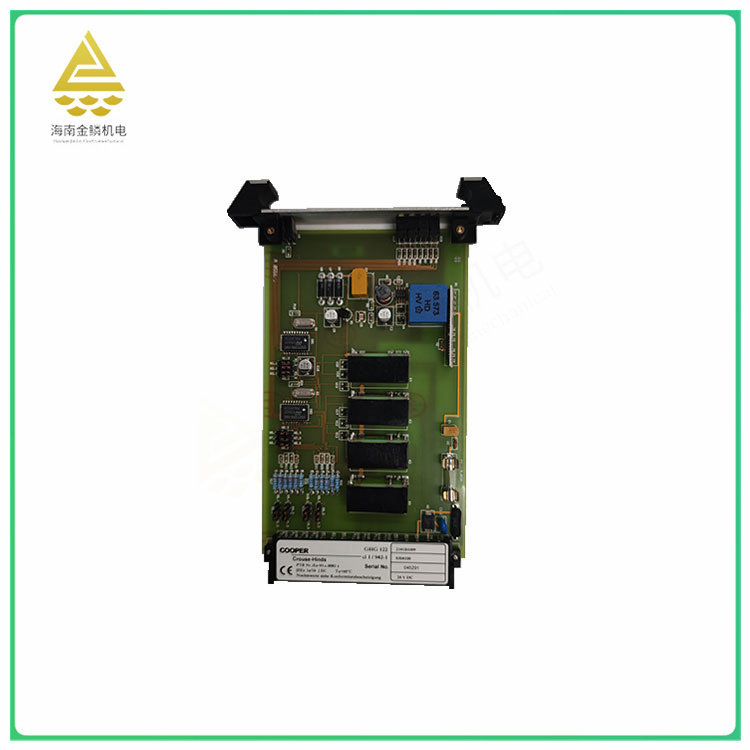
Type: Signal regulator
Application: Isolation amplifier
Function Provides relay output for NAMUR digital input. Electrical insulation
Operating power :120 volts AC
Input voltage :NAMUR specification
Input current :NAMUR specification
Output voltage: 250V AC / 100V DC
Output current :5 Aac/2 Adc
Capacity :2 channels
Connection: Screw clamp terminal
Temperature range :-4 to + 140 degrees Fahrenheit (-20 to + 60 degrees Celsius)
Installation :din rail
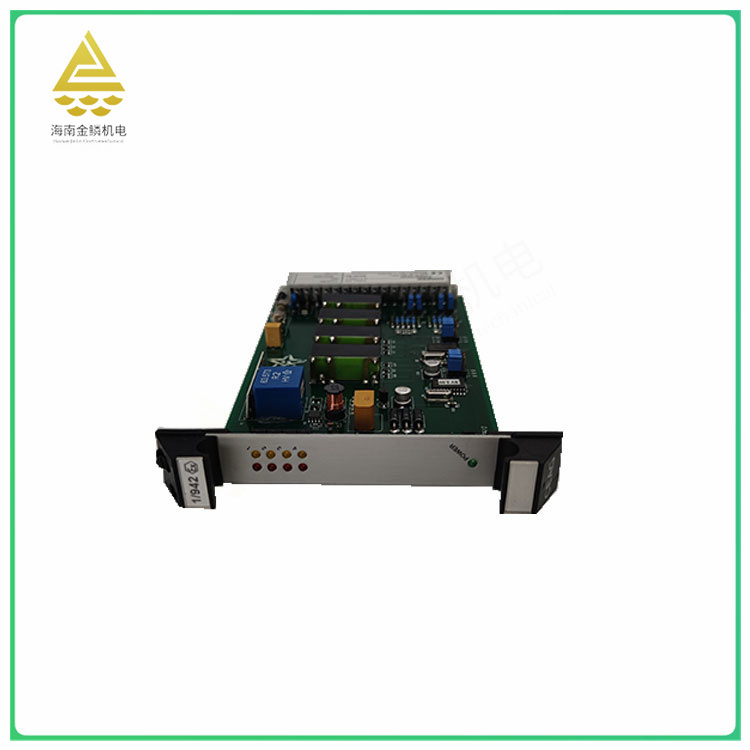
A GHG122 signal regulator, also known as a signal processor, is an electronic device that processes and adjusts input signals to improve their quality and performance. The main functions of the signal regulator include:
Amplification: The input signal is amplified to the appropriate level.
Filtering: The GHG122 filters out unwanted frequency components to reduce noise and interference.
Conversion: The conversion of the input signal to another format, such as analog-to-digital conversion (ADC) or digital-to-analog conversion (DAC).
Modulation and demodulation: The modulation or demodulation of an input signal for transmission in an analog or digital communication system.
Signal conditioning: Other processing of the input signal, such as linearization, level adjustment, and temperature compensation.
Key features of the signal regulator include:
High accuracy: GHG122 signal regulators typically have high-precision amplification, filtering, and conversion capabilities to accurately process and adjust input signals.
Versatile: The GHG122 signal regulator can perform a variety of signal processing tasks, such as amplification, filtering, conversion, modulation and demodulation, and can be adapted to different application requirements.
High stability: Signal regulators usually have high stability and reliability, and can maintain good performance during long periods of work.
Programmability: Some GHG122 signal regulators are programmable and their parameters can be controlled and adjusted by software to suit different signal processing needs.
Small size: Signal regulators are typically compact in design, have a small size and low power consumption, and can be adapted to a variety of application scenarios.
Overall, the GHG122 signal regulator is a very useful electronic device that can process and adjust input signals to improve their quality and performance. They have the characteristics of high precision, multi-function, high stability, programmability and small size, and can be adapted to various application scenarios.


