The IS200VVIBH1CAC is a printed circuit board manufactured by AG for the Mark VI system. Mark VI is one of the gas and steam turbine management systems released by General Electric under the name "Speedtronic".
The IS200VVIBH1CAC is used as a vibration monitoring board. The PCB processes vibration probe signals from DVIB or TVIB terminal boards. These probes are connected directly to the terminal board. Up to 14 probes can be attached to a single board. The IS200WVIBH1CAC digitizes these signals and sends them to the controller via the VME bus.
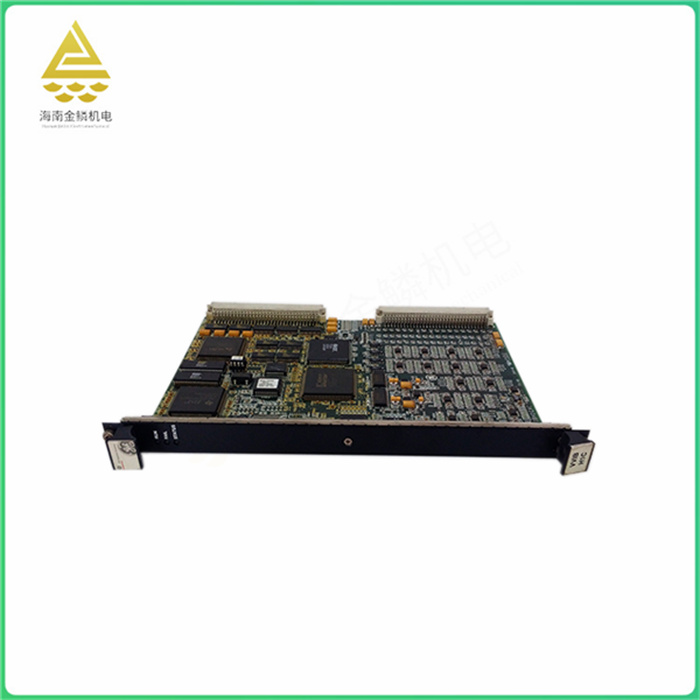
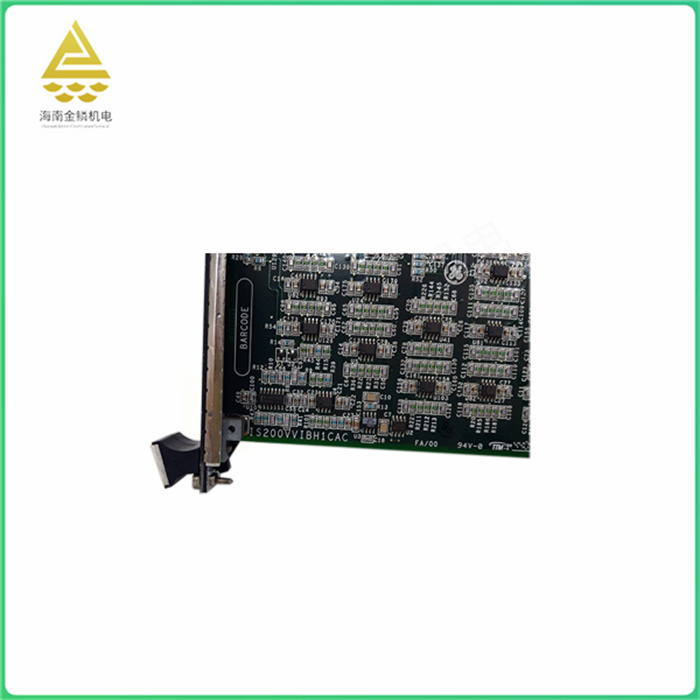
The IS200VVIBH1CAC is a printed circuit board manufactured by GE for Mark VI systems for vibration monitoring in gas turbine and steam turbine management systems. The PCB board processes vibration probe signals from DVIB or TVIB terminal boards, and up to 200 probes can be connected to each board. The signal is digitized and transmitted to the control system to monitor the vibration of the machine and ensure its normal operation.
The main functions of the printed circuit board (PCB) are:
Provide mechanical support for various components in the circuit.
The electrical connection of various electronic components to form a predetermined circuit plays the role of relay transmission.
The installed components are marked with mark symbols, which is easy to insert, check and debug.
In addition, PCB is also widely used in communication electronics, consumer electronics, automotive electronics, industrial control, medical, aerospace, defense, semiconductor packaging and other fields.
Printed circuit boards are widely used in the field of communication electronics. For example, in communication equipment, printed circuit boards are used to connect various communication modules, such as radio modules, radio frequency modules and optical fiber modules, to achieve the transmission and exchange of information. In addition, printed circuits are used in communication products, computers, and almost all other electronic products. These printed circuit technologies make the transmission of information more efficient and reliable.
The advantages of printed circuit boards mainly include:
High reliability: The design and manufacturing process of the printed circuit board has been carefully controlled, which can ensure the reliability and stability of the circuit, reduce the loosening and poor contact between the components, thus improving the reliability of the entire circuit system.
High production efficiency: the design and manufacturing of printed circuit boards can achieve automated production, greatly improving production efficiency and manufacturing accuracy, and reducing costs.
Small size, light weight, less space: the printed circuit board has the characteristics of small size, light weight and less space, which can accommodate more electronic components and circuits in a small space, so as to achieve a high degree of integration and miniaturization of the circuit.
Good stability: the printed circuit board can effectively prevent interference and noise in the circuit, thus ensuring the stability and reliability of the circuit.
Repeatability: After the wiring of a circuit board is verified, it is no longer necessary to check whether the interconnection on each board is correct one by one, and the connection of all boards is consistent with the template. This method is suitable for large-scale industrial production.
Easy signal transmission: All signals can be tested directly at one point along the wire. No short circuit caused by wire contact.
Good welding effect: modern welding methods can ensure high speed and high quality welding work, reduce the situation of virtual welding, missed welding, etc., thus reducing the failure rate of electronic equipment.
In general, the advantages of printed circuit boards are mainly concentrated in high reliability, high production efficiency, high integration, good stability, strong repeatability, easy signal transmission and good welding effect.


