The LSU-113DG is a module for industrial automation control, usually used in DCS (distributed control system) or PLC (Programmable logic Controller) systems. It has a variety of functions and features, here are some key points:
Module type: The LSU-113DG is a control module designed for automated control systems. It is capable of receiving input signals, processing these signals and controlling devices or systems through output signals.
Scope of application: Widely used in various industrial fields, such as chemical, pharmaceutical, food processing, electricity and so on. In these areas, the LSU-113DG module can be used as part of the control system to automate and monitor the production process.
Main functions: including input signal processing, logic operation, control algorithm implementation, output signal adjustment. These features enable the LSU-113DG to perform precise control of industrial equipment according to preset procedures or algorithms.
Connection to other devices: Communication with other control modules, sensors and actuators is usually possible via bus or network. This enables the LSU-113DG to form a complete control system, enabling information exchange and collaborative work between devices.
Reliability and stability: The design takes into account the harsh conditions of the industrial environment, including temperature, humidity, vibration, etc. Therefore, the LSU-113DG has high reliability and stability, and can operate trouble-free for a long time.
Easy to program and maintain: usually supports a variety of programming languages, such as ladder diagram, structured text, etc., to facilitate engineers to program and debug. In addition, the modular design makes it easy to maintain and reduces operating costs.
Customization: You can customize the LSU-113DG based on application requirements, including the number of input and output channels and communication protocols. This helps meet the specific needs of customers and increases the efficiency of system integration.
To sum up, the LSU-113DG is a module suitable for industrial automation control with a variety of functions and features. It increases productivity, reduces operating costs and ensures system stability and reliability.
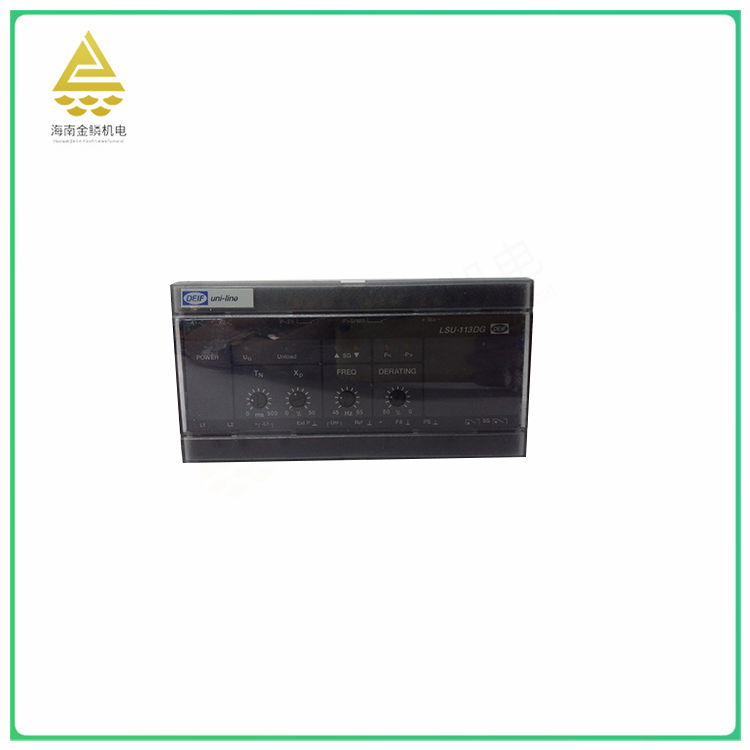
The LSU-113DG load divider is a device for power systems whose main function is to ensure that the power load is evenly distributed among multiple generator sets, thereby improving the efficiency and reliability of the power system. Here are some detailed analyses of the advantages and disadvantages of the LSU-113DG load divider:
Advantages:
Improve efficiency and reliability: The LSU-113DG load distributor monitors the load of the power system to ensure the load balance among the various generator sets, thereby reducing overload or underload and improving the stability of the system. This helps to improve the operational efficiency and reliability of the entire power system.
Reduced operating costs: By achieving a balanced distribution of power loads, the LSU-113DG load divider can avoid overuse or idling of the generator set, thereby extending the service life of the equipment, reducing the frequency of maintenance and replacement parts, and reducing operating costs.
Simplified management: The LSU-113DG load divider provides real-time load monitoring and reporting, enabling managers to easily track the operating status of the system and identify and resolve potential problems in a timely manner. This helps simplify the management process and reduce the manpower burden.
Adaptable: The LSU-113DG load divider is suitable for power systems of all sizes and can be configured and adjusted according to actual needs. This makes it have good adaptability in different power projects and application scenarios.
Weaknesses:
Higher cost: The LSU-113DG load divider may be more expensive than some traditional load distribution methods. This may increase the investment cost of the entire power system, but it is still economical in the long run given the efficiency and reliability gains it brings.
Technical complexity: The LSU-113DG load distributor involves more complex technical principles and requires professional technicians to install, debug and maintain. This may increase technical difficulty and labor costs.
Limited compatibility with older equipment: The LSU-113DG load divider may not be fully compatible with some older generator sets and power system equipment. This may require updating or replacing parts of the equipment to achieve full integration with the LSU-113DG load divider.