The NI-9234 is a data acquisition card mainly used for sound and vibration input, with 4 channels, each channel sampling rate of 51.2kS/s, support for IEPE and AC/DC signal input. The device measures signals from integrated electronic piezoelectricity (IEPE) and non-IEPE sensors such as accelerometers, tachometers, and proximity probes.
In addition, the NI-9234 has a wide dynamic range and integrates software-optional AC/DC coupling and IEPE signal conditioning. Each channel has a built-in anti-aliasing filter that can be automatically adjusted to the sampling rate.
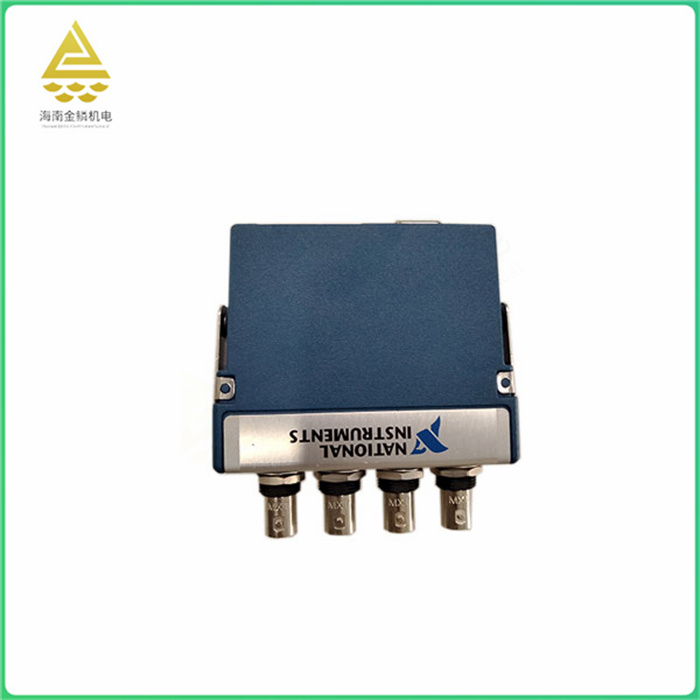
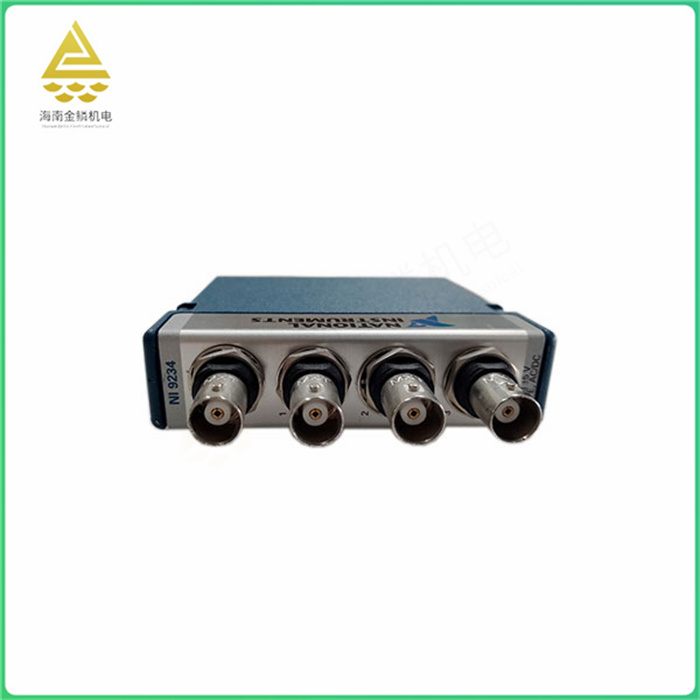
The functions of NI-9234 are:
Signals from both IEPE and non-IEPE sensors, such as accelerometers, tachometers, and proximity probes, can be measured simultaneously.
Each channel has a built-in anti-aliasing filter that can be automatically adjusted to the sampling rate.
Provides a wide dynamic range and integrates software-optional AC/DC coupling and IEPE signal conditioning.
When using the NI-9234, NI software can be utilized for condition monitoring processing functions such as frequency analysis and order tracking.
The advantages of NI-9234 are mainly reflected in the following aspects:
High precision measurement: The device can measure signals from both IEPE and non-IEPE sensors, such as accelerometers, tachometers and proximity probes, and has a wide dynamic range to meet the accuracy requirements of different application scenarios.
Automatic tuning and optimization: Each channel has a built-in anti-aliasing filter that automatically adjusts to the sampling rate, while integrating software-optional AC/DC coupling and IEPE signal conditioning, allowing the device to adapt to different operating environments and signal types.
Multi-channel synchronous measurement: The signal of multiple channels can be measured at the same time to achieve multi-channel synchronous measurement, which is conducive to improving the efficiency and accuracy of measurement.
Powerful data processing capabilities: NI-9234 can be used with NI software to provide processing functions for condition monitoring, such as frequency analysis, order tracking, etc., which makes the device have strong capabilities in data processing.
High reliability: The equipment is designed to operate in harsh environments, such as high temperature, low temperature, high humidity, strong vibration and strong electromagnetic interference, with high reliability and stability.
Highly customizable: Supports a range of expansion modules and additional cards that can be customized to meet specific application requirements.
Good programming support: You can program with a variety of development tools and languages to facilitate application development and debugging.
In general, the advantages of NI-9234 are mainly concentrated in high-precision measurement, automatic adjustment and optimization, multi-channel synchronous measurement, powerful data processing capabilities, high reliability, high customizability and good programming support, which can meet the application needs of different fields and scenarios.
The application scenarios of NI-9234 mainly include the acquisition of sound and vibration. As a 4-channel C-series dynamic signal acquisition module, it can perform high-precision audio measurement for integrated circuit piezoelectric (IEPE) and non-integrated circuit piezoelectric (IEPE) sensors. For example, it can digitize the signal of a microphone or acceleration sensor, and it can also conduct more in-depth analysis and processing of audio signals, such as frequency analysis, order tracking, and so on. In addition, due to its high reliability and stability, it is also suitable for operation in harsh environments.
The principle of NI-9234 signal acquisition is mainly to digitize the input signal through its built-in anti-aliasing filter. The sampling rate of each channel can be automatically adjusted to match the frequency of the signal. At the same time, the device also integrates software-optional AC/DC coupling and IEPE signal conditioning capabilities, which can be selected according to different sensor types and signal conditioning needs.
When using IEPE sensors, the NI-9234 can measure physical quantities such as acceleration, velocity, and displacement. IEPE sensors are usually made of piezoelectric materials, and when subjected to external forces, their internal charge is generated, which outputs a voltage signal. NI-9234 can measure these physical quantities by collecting the voltage signal and processing it digitally.
For non-IEPE sensors, such as microphones, tachometers, etc., the NI-9234 can also perform high-precision measurements. The output signals of these sensors are usually voltage or current signals, and the NI-9234 digitizes these signals with a built-in anti-aliasing filter for high-precision measurement and analysis.
In short, the principle of NI-9234 signal acquisition is mainly through the digital processing of input signals, and integrates a variety of functions to adapt to different sensor types and signal conditioning needs.


