The PCD235A101 is an ABB module with a variety of functions and features. First, it offers three additional relay outputs that can be used to control devices such as pumps and fans, or for many monitoring functions. Second, the module has a clock function that allows all relays to be programmed to open or close the time. In addition, the PCD235A101 module also supports fieldbuses and can be used to control any external component in the system. In addition, the module has an encoder feedback option that can be used in conjunction with the encoder module to improve the direct approach to motor control. Finally, the PCD235A101 module also has a universal driver that can accommodate the encoder module.
Overall, the PCD235A101 module is a powerful module suitable for a variety of applications requiring motor control and monitoring.
The PCD235A101 module is an excitation control module commonly used in generator excitation systems in the power field. The excitation control module is used to control the excitation of a motor or generator, ensuring that the current and voltage are within the proper range to maintain the stability and performance of the equipment. As a result, the PCD235A101 module can control a variety of motors, generators, and equipment related to excitation systems.
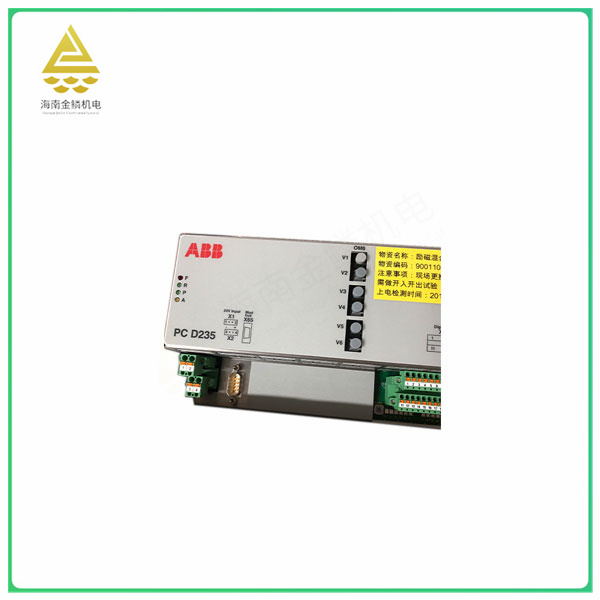
In addition, depending on different application scenarios and requirements, the PCD235A101 module can be integrated with other devices or systems to achieve more complex functions and control systems. For example, it can be connected with industrial automation control systems such as PLC (programmable logic controller) and DCS (distributed control system) to achieve remote monitoring and control. At the same time, the module can also be used in conjunction with other ABB's controllers, drivers and sensors to build complete automation solutions.
In short, PCD235A101 module is a powerful excitation control module, which can be used in a variety of power equipment and systems requiring excitation control, and has a wide range of application prospects.
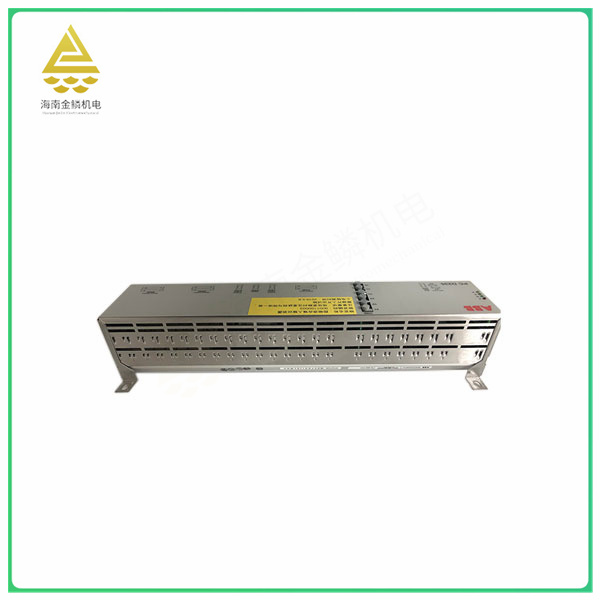
The PCD235A101 module is a powerful excitation control module with many advantages, but there are also some shortcomings.
Advantages:
Precise control: The module adopts advanced control algorithm, which can accurately control the excitation current to ensure the stable operation of the power equipment.
High efficiency and energy saving: The module has a high energy utilization rate, which can reduce energy consumption and improve the operation efficiency of power equipment.
High reliability: The module uses high-quality electronic components and manufacturing processes, which have high reliability and stability, and can meet the demanding requirements of long-term operation.
Easy to operate: the module has a simple and easy-to-use interface and operation mode, which is convenient for users to set up, debug and use.
High-precision clock function: The module has a high-precision clock function, and all relays can be programmed to open or close the time to achieve timing control.
Support a variety of communication protocols: The module supports a variety of communication protocols, such as Modbus, Profibus, etc., to facilitate data exchange and communication with external devices.
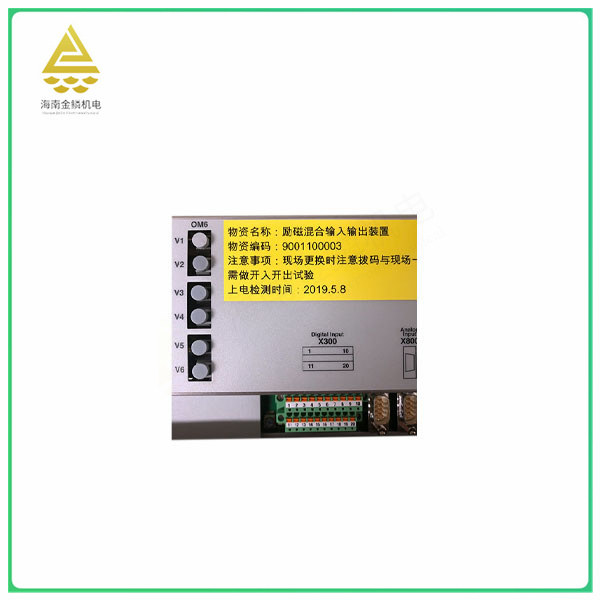
Strong scalability: The module has multiple expansion slots, and other expansion modules can be added as needed to achieve more complex functions and control requirements.
Cons:
Higher cost: Compared to some low-cost excitation control modules, the PCD235A101 has a higher cost, which may increase the cost of the entire control system.
Large volume: Due to the complexity of its internal circuits and functions, the PCD235A101 is relatively large and may not be suitable for space-limited application scenarios.
Sensitive to ambient temperature: In high temperature environments, the stability and life of the module may be affected, requiring proper thermal design and maintenance.
Professional and technical personnel are required for debugging and maintenance: Because the function and operation of the module are more complex, professional and technical personnel are required for debugging and maintenance, which increases the cost and maintenance difficulty.
In summary, PCD235A101 module has the advantages of precise control, high efficiency and energy saving, high reliability and easy operation, but it also has some shortcomings such as high cost, large volume and sensitivity to ambient temperature.


