The functions of the CI-5421 include generating arbitrary waveforms and for data streaming. It can precisely produce arbitrary waveforms defined by users, as well as standard sine, slope, triangle, and square wave signals. In addition, it can be used for data streaming and advanced synchronization.
Applications of CI-5421 include signal generation, data flow, and advanced synchronization. In terms of signal generation, it can be used to generate various waveforms, such as sine waves, square waves, sawtooth waves, etc., for testing, analyzing and debugging electronic equipment. In terms of data flow, it can be used to generate various data streams, such as random data, pulse data, etc., for data transmission and processing. In terms of advanced synchronization, it can be used to realize the synchronization of various devices, such as audio, video, communication and other devices.
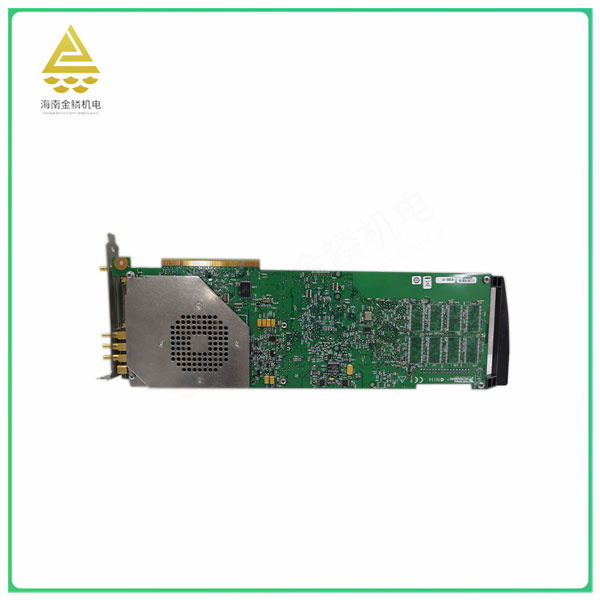
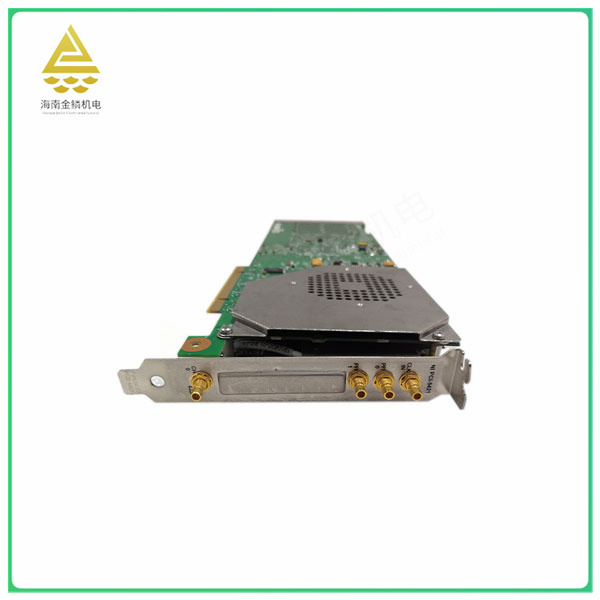
The NI 5421 series is a 100 MS/s arbitrary waveform generator (AWG) featuring a compact 1-slot 3U PXI module or PCI board with 16-bit resolution and up to 256 MB of onboard memory. By virtue of high
The combination of resolution and deep memory allows users to produce long and precise aperiodic waveforms that are ideal for a range of applications in communications, consumer electronics, scientific research, automotive, and military/aerospace
Yes. Because the NI 5421 series uses the PCI bus, waveform downloads are 280 times faster than the GPIB-based AWG. With the NI 5421 series' N synchronization and Memory Core (SMC) architecture,
Users can create excitation/response systems with digitizers and digital waveform generators/analyzers, or synchronize multiple arbitrary waveform generators to form phase-coherent multi-channel systems.
Analog output performance
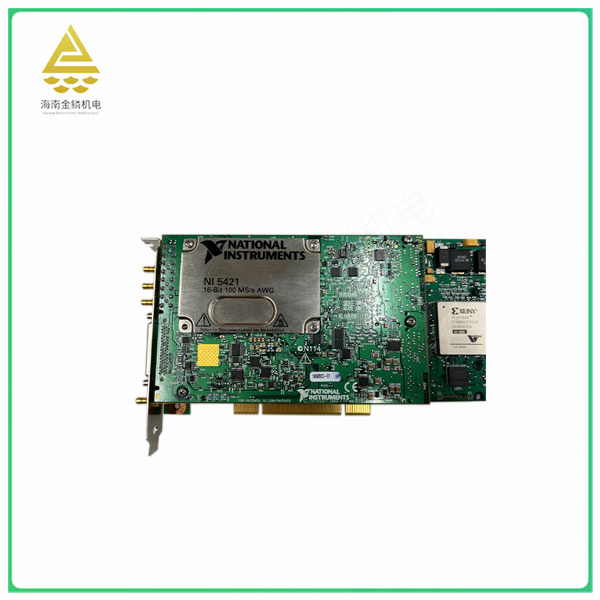
The NI 5421 series features a 100 MS/s, 16-bit digital-to-analog converter (DAC) and a concise back-end analog design with a close range spury-free dynamic range (SFDR) average noise density of 91 dBc
The value is -148 dBm/Hz. These features make it ideal for the most stringent frequency-domain applications common in communications. Depending on the signal and application requirements, users can choose between 2x, 4x, or 8x interpolation to get up to
Effective sampling rate of 400 MS/s. For demanding time domain applications, the NI 5421 series features < at the analog output; 5% pulse distortion and &ut; 1.0 ps rms jitter.
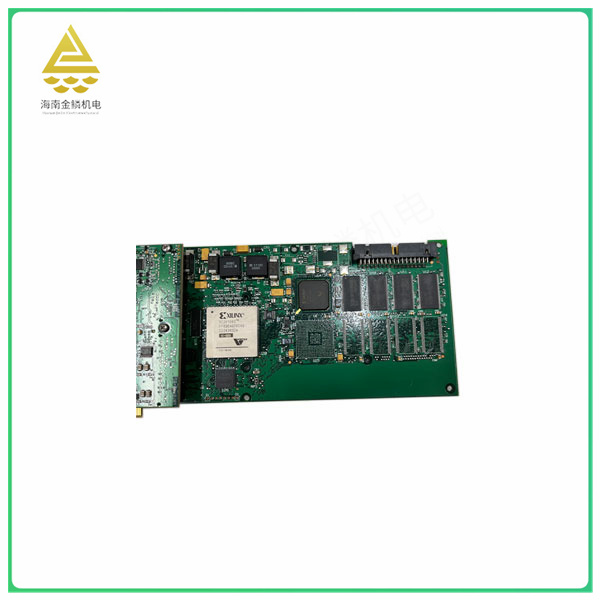
The analog output path features a 43 MHz 7-pole elliptical analog filter to suppress unwanted high-frequency signal images. Users can also choose between 50 or 75? The output impedance is changed with three-digit accuracy
Out attenuation. In addition, a direct path can be used to bypass output gain and attenuation. The direct path is ideal for intermediate frequency (IF) applications, with a passband flatness of +0.25 dB in the 0 to 40 MHz range.
Shared waveform and instruction memory
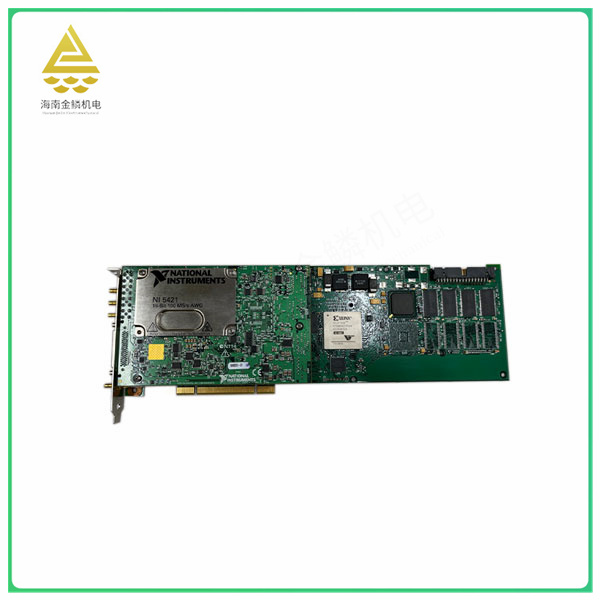
Because the NI 5421 series is built on the SMC architecture, they use the same physical memory to store waveform data and sorting instructions. Traditionally, AWG instruction memory is physically associated with waveforms
The data memory is separated, usually only a few kilobytes. The limited instruction memory of a traditional AWG severely limits the maximum number of waveforms that can be sorted, as well as the AWG's overall flexibility. NI 5421 series 8, 32
Or 256 MB of onboard memory to store data and instructions together, allowing flexibility to use the space needed to sort instructions. By sharing memory, memory space can be used with small waveforms
Very long sequences, short sequences with very large waveforms, or a balance between the two.
Trigger and sort
The NI 5421 series has four trigger modes for controlling the start and stop of waveform generation single, continuous, step and burst. Flexible linking and cycling with the NI 5421 series through these trigger modes
Combined with sex, one can create complex waveforms. With 256 MB memory configuration, more than 1 million waveforms can be stored in memory and linked in any order. Each waveform segment can cycle at most
16,777,216 or infinite cycles. Triggers can be received from software as well as from front panel connectors, PXl trigger wires, PXI star triggers, or RTSI buses.


