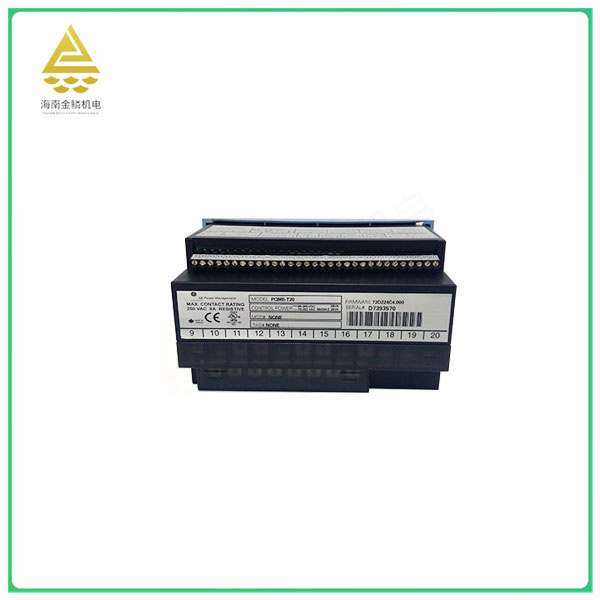
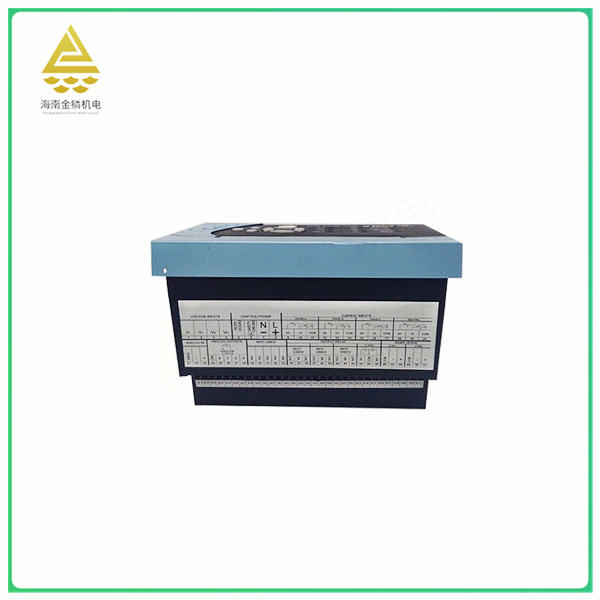
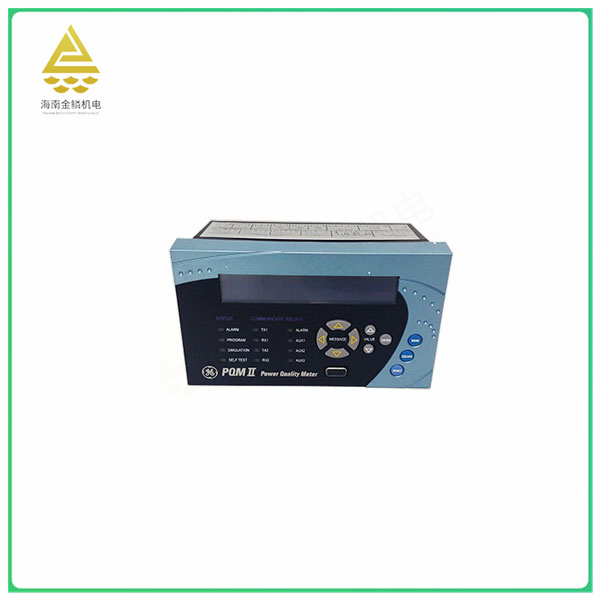
Description The GE pqmi-t20 module is a power quality meter that provides accurate electrical parameter monitoring
Measurement and analysis. Designed for industrial and commercial applications, it offers advanced capabilities for total power management.
The control scale represents the PLC control ability to see how many inputs and output points it can control how many simulations.
Controlling scale is about speed. Because the scale is large, the user program is long, and the speed of executing instructions is not fast, which is bound to extend the PLC cycle
Time will inevitably prolong the PLC's response to the input signal. In order to avoid this situation, the PLC work speed must be fast. As a result,
Large PLCS always work faster than small ones.
The control scale is also related to the size of the memory area. Large scale, long user program, requiring a larger user storage area. If you count too much at the same time,
The system's memory input and output signal area (input and output relay area or input and output mapping area) is also large. This is a big area,
Accordingly, the number of internal devices (explained below) is also increased, which requires a larger system storage area.
The control scale is also related to the number of input and output circuits. If the control scale is 1024 points, there must be 1024 I/O circuits. These electricity
The path is integrated in the I/O module, and the number of I/O points of the sea module is always counted. So, the scale is large, and the modules used are also
A lot.
The control scale is also related to the PLC instruction system. Large scale PLC instruction number, instruction function is also strong, in order to cope with the number of points
The need for system control.
The control scale is an indicator that plays a restricting role in other performance indicators of PLC. PLC is also divided into micro, small, medium, large and super large


