The PXI-6251 is a powerful modular instrument that provides 16-channel, 16-bit analog acquisition channels with a single channel acquisition frequency of 1.25MS/s and a multi-channel acquisition frequency of 1MS/s. It also features 2 16-bit analog output channels with an update speed of 2.8MS/s. In addition, the PXI-6251 provides 24 digital TTL input/output control and 2 pulse input/output, with a maximum analog input and output voltage range of -10V to +10V.
The programming language of the PXI-6251 is LABVIEW, which is a graphical language for virtual instruments. LABVIEW8.5 can be used to complete the design of PXI module, realize 2 analog voltage waveform output of different frequencies, 1 digital pulse output, multi-channel digital TTL level output, and collect and save signals.
In test work, the purpose of calibration is to adjust the test equipment to reduce errors. Because the circuit state and parameters of components such as amplifiers, filters, A/D converters and internal reference sources in the test instrument may deviate from standard values and drift with time and temperature changes, calibration is required. The calibration principle of PXI-6251 is to compare the measured value of PXI-6251 with a known high-precision measurement source, calculate the adjustment value that minimizes the deviation between the two, and store this value in the EEPROM on the board as a calibration constant. The calibration constants are read from the EEPROM before the test is performed to calibrate the hardware, and these processes can be controlled by software.
In addition, the PXI-6251 has a variety of application scenarios, including laboratory automation, research, design verification/testing to manufacturing testing and other applications, providing low-cost and reliable DAQ capabilities for a variety of applications from laboratory automation to manufacturing testing.
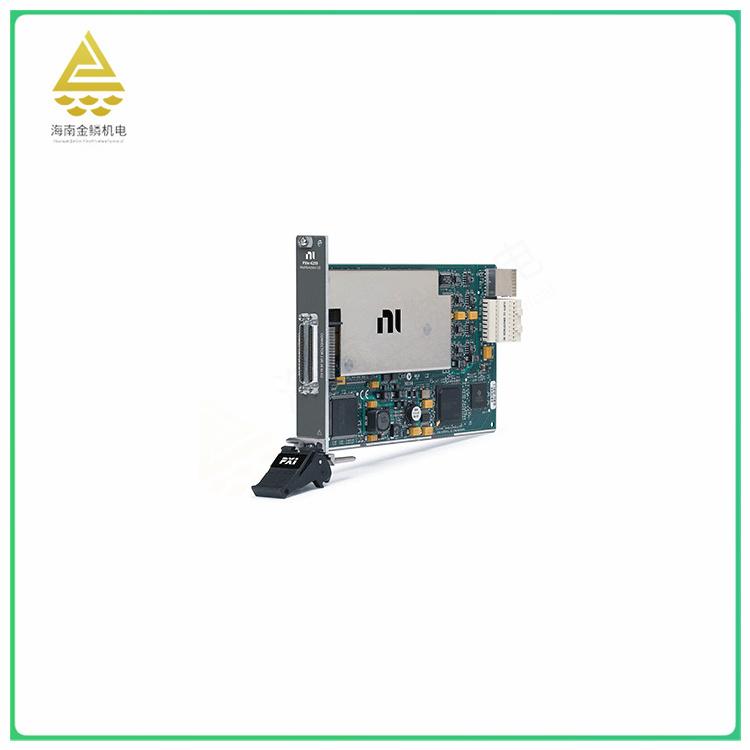
The PXI-6251 is a multi-function I/O module based on the PXI bus with analog I/O, associated digital I/O, two 32-bit counters/timers, and analog and digital triggers.
Specifically, it provides 16 16-bit analog input channels with a single channel acquisition frequency of 1.25 MS/s, 1 MS/s for multiple channels, and 2 16-bit analog output channels with an update speed of 2.8 MS/s. In addition, it has 24-way digital TTL input/output control and 2-way pulse input/output. In terms of software, the PXI-6251 can be programmed using LABVIEW and simplifies the configuration and measurement process.
In terms of application areas, the PXI-6251 can be used in a wide range of scenarios requiring low-cost, reliable DAQ capabilities, such as laboratory automation, research, design validation/testing, and manufacturing testing. In addition, it can also be used for component characteristics analysis, electronic testing, sensor measurement and other fields. In control applications, the PXI-6251's digital lines can be used for pulse width modulation to control devices such as valves, pumps, motors, lights and fans. In addition, it supports the addition of multiple signal conditioning modules, which can be used to add sensors and high voltage measurement functions to the device.
In summary, the PXI-6251 is a powerful and versatile modular instrument that can meet a wide variety of test and control needs.