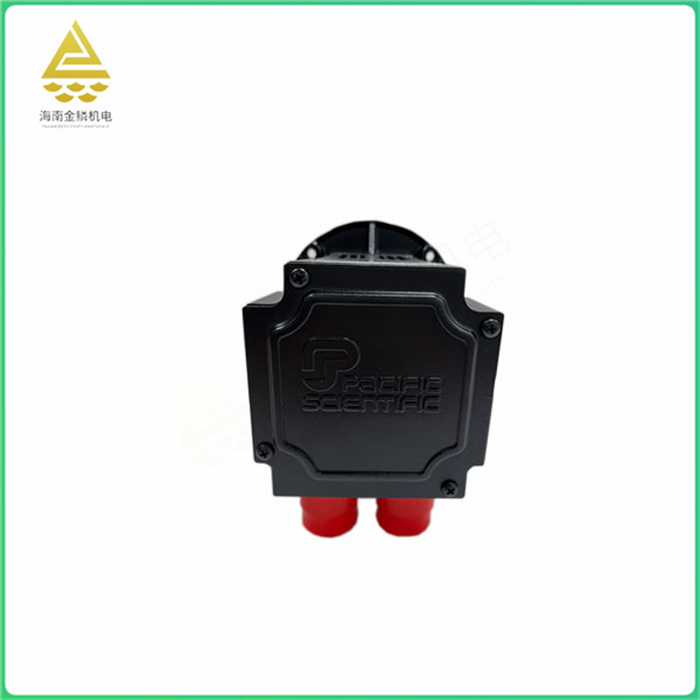
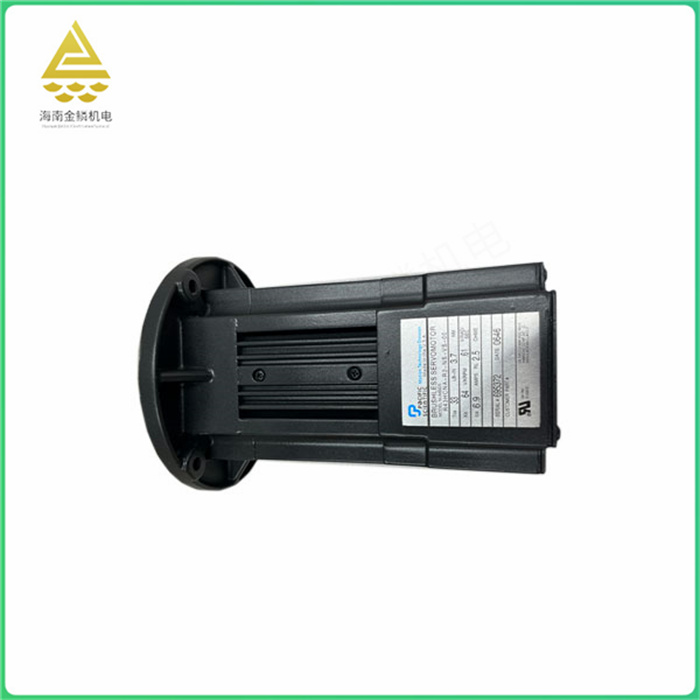
Brand: PACIFI
Model: R43HCNAR2NSVS0O
Name: Brushless servo motor
Warranty: One year
The R43HCNAR2NSVS00 is a brushless servo motor with a rated speed of 2500 RPM.
The advantages of R43HCNAR2NSVS00 include:
Small size, compact structure, easy to install.
The brushless structure avoids the friction between the carbon brush and the commutator of the traditional brush motor, thus improving the efficiency and life of the motor.
Stable operation, low noise.
With overload protection function, can withstand large external load.
Simple maintenance, long service life.
In summary, R43HCNAR2NSVS00 is a brushless servo motor with excellent performance, easy use and simple maintenance.
Each NDIO module will replace certain standard input signals on the ACS 600 Standard I/O Board (NIOC), depending on the module's address (1 to 3). The relay output of each NDIO module increases the number of transmission relay output signals. The information represented by the relay output signal is pre-programmed and cannot be changed by the user. The user should check and adjust the following parameters to activate the NDIO module. Before adjusting the parameters, check that the address of the module is set correctly. Note that the new parameter Settings take effect only when the module is powered on the next time.
The communication standard remote I/O. also has the function of directly connecting with ABB drive equipment, module parameters can be configured through the bus, typical parameters include tag name, signal range, filtering time, etc. The status of the module is indicated by a series of indicators, which can also be checked remotely through the bus. The analog value is expressed as 0 to 100% of the signal range, AI/AO module is refreshed every 4 VO scan cycles, RTD/TC module is refreshed every 10 IO scan cycles, and the value is transmitted periodically on the bus. The transmission ability depends on the bus and the bus master device, and the bus interface module periodically scans the I/O module. The cycle value ranges from 4 to 108ms, depending on the type and number of I/O modules.
A servo motor is a type of motor that can precisely control the Angle or position of rotation. The working principle is to precisely control the Angle or position of the motor by controlling the feedback signal between the position sensor on the motor rotor and the controller. When the controller receives the control signal, it compares the signal with the feedback signal of the motor, and then adjusts the current of the motor to achieve precise position or Angle control. This type of control is commonly used in automation equipment, robots and other industrial applications that require precise position control. The servo motion control card is a hardware device used to control the servo motor, and its working principle can be simply described as the following steps: Sensor acquisition: The servo motor needs to sense its motion state and position through sensors, which can be encoders, Hall sensors, etc.
Controller calculation: The controller in the servo motion control card will process and calculate the information collected by the sensor to obtain the position, speed, acceleration and other parameters of the motor, and control according to the preset motion trajectory and control algorithm. Motor drive: The control signal calculated by the controller will be amplified by the amplifier and sent to the motor driver, and the movement of the motor will be realized by controlling the current and voltage of the motor. Feedback control: The motion state of the servo motor will be fed back to the controller in real time through the sensor, and the controller will adjust the motor according to the feedback information to make it as close as possible to the preset motion trajectory and maintain stability. In general, the servo motion control card uses the sensor to collect the motor motion state, the controller calculates the control signal and controls the motor motion through the driver, and adjusts the motor motion state in real time through the feedback control to achieve accurate control and stable motion.
The rotary servo in PLC is an electronic device used to control the rotating motion of the shaft. By receiving the control signal output by PLC, it drives the motor and controls it to achieve a specific rotation Angle and speed. Rotary servo usually consists of a motor, position encoder and controller. The working principle of rotary servo is mainly divided into two processes: feedback process and adjustment process. In the feedback process, the position encoder senses the actual position of the motor and feeds this information back to the controller. The controller compares the actual position with the expected position and calculates the control signal based on the error. In the process of adjustment, the controller sends the control signal to the motor and realizes the precise position control of the motor by adjusting the drive current.


