SCM4.2 synchronous controller module is a device used to control AC power supply, which can be connected with the computer system to control the start, stop and running state of the system.
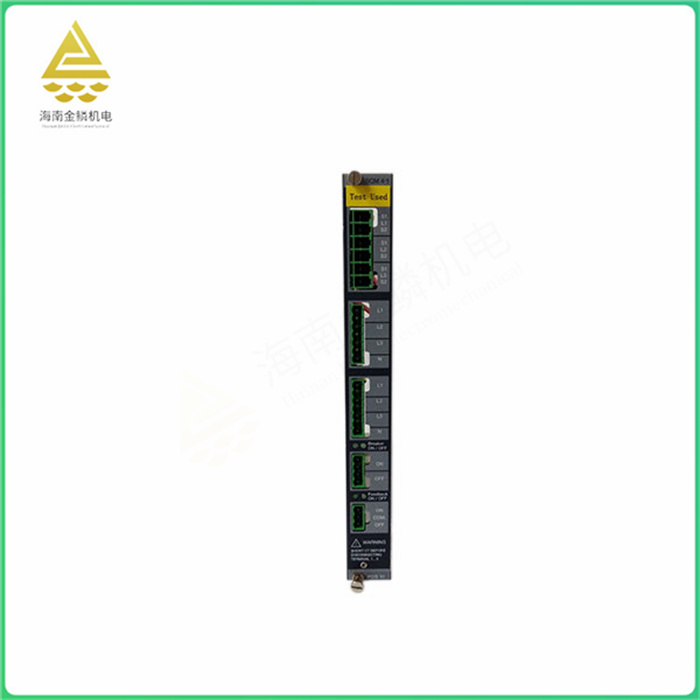
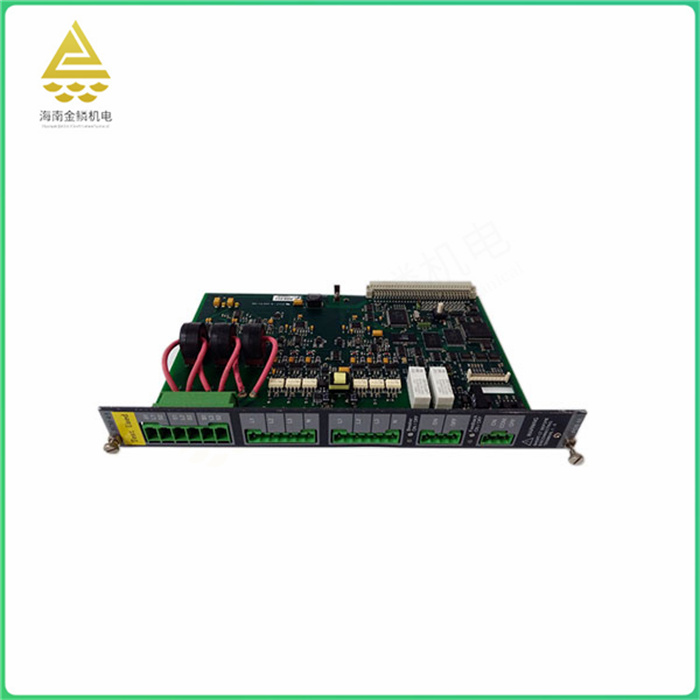
The advantages of SCM4.2 synchronous controller module include:
Synchronous control: It can ensure that multiple devices are operating simultaneously, improving overall efficiency.
Improve production quality: It can effectively control the operation time and working time of each equipment, which is conducive to improving production quality.
Improve product consistency: In a multi-machine collaborative production line, the synchronous controller ensures that each production link is carried out according to the requirements, which can improve the consistency of the product.
Avoid competition and interference between devices: Through synchronization control, competition and interference between multithreads can be avoided, and the concurrency of the program and the performance of the system can be improved.
Protect data: Introduce the concept of locking for resources to ensure the consistency and integrity of data when multiple threads access a shared resource.
High flexibility: can be customized according to different requirements, such as fair or unfair lock, reentrant lock, read and write lock.
When using a synchronous controller, it is necessary to make trade-offs and choices according to the actual situation to make full use of its advantages.
Application scenarios of the SCM4.2 synchronous controller module include but are not limited to:
In the field of industrial automation: in the machining and production process, a variety of positioning control, speed control and tension control are essential. The synchronous controller can adapt to drive AC frequency conversion speed regulation drive mode, and can be applied to rotary press in printing machinery, multi-color overprinting machinery, traction system in textile machinery.
Financial trading systems: millisecond time synchronization accuracy is crucial to ensure the fairness and accuracy of transactions.
Power system: Accurate time synchronization can achieve stable operation of the power grid and phase synchronization control.
Other fields: such as constant length cutting of continuous production materials, positioning control of mechanical arms, Angle control of mechanical workpieces, etc.
The SCM4.2 synchronous controller module provides the following functions:
By controlling the chip test execution module, the test result judgment action is realized synchronously in the business board, so as to improve the chip test efficiency and reduce the test cost.
The synchronization controller module can realize the mutual synchronization of the test results of multiple business boards very well. It only needs to set the relevant synchronization register before the test program runs to achieve the mutual synchronization of the test results of multiple business boards.
The synchronous controller comprises a non-gate and an and-gate; The signal of the synchronous register passes through the not gate, and the chip test result of the business board is taken or, and the result after the chip test result of the business board is taken and the chip test result of the business board is taken.
The design of synchronous controller can ensure the selectable of the test business board.
SCM4.2 synchronous controller modules are used in many fields, the most common of which are in industrial automation, aerospace, robotics and other fields. It can realize the synchronous control of the motor, thus improving the precision and stability of the motor. By monitoring and regulating the running state and control effect of the motor, the synchronous controller ensures that the motor runs in an accurate position and Angle.
In addition, the synchronous controller can also reduce the power consumption and noise of the motor, which plays an important role in improving the efficiency of energy utilization and management. It can also be used to achieve synchronous operation of multiple motors, improving the accuracy and coordination of motion.
The working principle of the SCM4.2 synchronous controller module is mainly to collect the position and speed information sent by the encoder or velocimeter, compare it with the set value, and then output the control signal to realize the synchronous control of the motor.
Specifically, the synchronization controller collects information about the position and speed of the motor, which can come from sensors such as encoders or tachometers. The controller will then compare the collected position and speed information with the preset reference value, and output the corresponding control signal according to the comparison result to adjust the running state of the motor.
The SCM4.2 synchronous controller also enables simultaneous operation of multiple motors. In this case, the controller collects the position and speed information of multiple motors and compares and analyzes this information. Then, the controller will output the corresponding control signal according to the comparison results to adjust the running state of each motor and realize the synchronous operation of multiple motors.
In short, the working principle of the synchronous controller module is to realize the synchronous control of the motor by collecting the position and speed information sent by the encoder or the speed measuring machine, comparing it with the set value, and then outputting the control signal.


